

Most of us have fond memories of watching Saturday morning cartoons or rushing home to catch our favorite sitcom or playing video games. However, Generation Z, born between the late 1990s and early 2010s, has a different story to tell. They grew up in a time of rapid technological advancement, which has greatly influenced their experiences.
We now live in a digital world where Gen Z has transformed traditional media consumption. They were raised during the emergence of smartphones, the widespread use of social media, and the popularity of on-demand entertainment. As a result, they possess a natural fluency in all things digital.
For Gen Z, screen time goes beyond passive television watching. They actively engage with technology through video games, social media, and mobile platforms. Their interactions are more interactive and immersive, shaping their unique reality.

Gen Z Trends to Level Up: The Game of Attention
There has been a significant shift in media consumption among Gen Z generation, indicating a departure from traditional forms.
Compared to older generations, Gen Z’s relationship with television is notably different. They spend less than half the time watching TV shows, preferring gaming. This makes up 22% of their screen time, and non-premium videos like YouTube content. Definitely, it accounts for another 21%. Traditional television only occupies 17% of their screen time.

Data from the YPulse Gaming report reveals that 95% of Gen Z and Millennials engage with video games, with 78% playing on a weekly basis or even more frequently. The competition for screen time is no longer limited to TV channels or streaming services. It has transformed into a virtual tug-of-war, with traditional television grappling with modern gaming platforms for the attention of young audiences.
Similar Posts
- Apple Vision Pro VR Headset Features, Price, Spec, Video and Release date
- My Experience with Apple Vision Pro after Trying it Out
While television still holds a significant portion of Gen Z’s weekly media time, it has become more of a multitasking activity rather than a dedicated pastime. Approximately 71% of young individuals frequently engage in other activities, such as scrolling on their phones or playing games, while watching TV. As a result, even though the television may be on, it doesn’t necessarily capture their full attention.
According to Netflix CEO Reed Hastings, their primary competition comes from video games, as they vie for valuable screen time. Hastings stated in a shareholder letter, “Our focus is not on Disney+, Amazon, or others, but on how we can improve our experience for others. We compete with (and lose to) Fortnite more than HBO. When YouTube experienced a global outage for a few minutes in October, our viewing and signups spiked during that time.”
Game Over, TV: Gaming Clocks More Hours
When we closely examine the gaming habits of Gen Z, it becomes clear that the competition between TV and gaming is fierce.
In terms of time spent on games, there is a noticeable difference between Gen Z and millennials. While both demographics engage in gaming on a weekly basis, Gen Z dedicates more time to gaming on their computers and mobile devices compared to millennials. With nearly 90% of Gen Z being gamers, they spend approximately 12.2 hours per week playing games on consoles and computers, slightly surpassing the 11.8 hours they spend watching television.
Popular games like Roblox, Minecraft, and Fortnite have a wide presence across different devices, drawing Gen Z away from traditional TV. These virtual worlds created by games hold significant importance in the lives of Gen Z, often rivaling the importance of their real-world experiences.
Upgrades makes Smartphone Screens Reign Supreme
Apart from gaming platforms, Gen Z also dedicates significant time to non-premium video platforms like YouTube and TikTok.
When it comes to screen time, Gen Z demonstrates a clear preference: 30% use smartphones, followed by 21% using smart TVs, 18% using computers, and 17% using streaming devices. These choices collectively push traditional television to the sidelines.
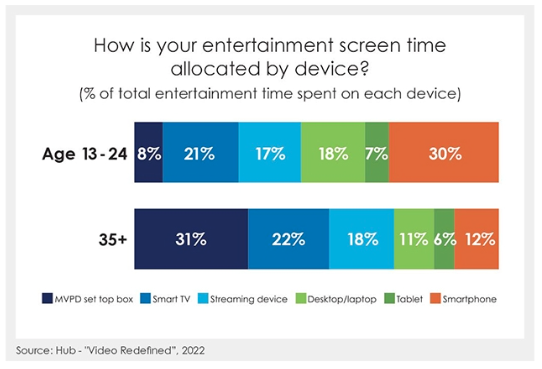
Cable TV usage is notably low among Gen Z, with only 8% of their screen time dedicated to shows via a cable box. The majority of Gen Z individuals state that their consumption of non-premium videos has resulted in reduced viewing of regular TV.
In cases where both YouTube and TikTok are used by Gen Z consumers, TikTok emerges as the favored platform. Currently, TikTok is Taking over Mobile Monetization Ads Revenue globally, However, there are some Polls shows that UK parents want TikTok banned from United Kingdom.
Conclusion
Going forward, about 73% of Gen Z respondents expressed that they would choose TikTok if they had to stick with just one platform. This preference signifies another shift in Gen Z habits: a growing inclination towards shorter, more interactive content offered by these platforms. While all these are going on, the issues below still come up on Tiktok;
- TikTok Ban, TikTok CEO Updates and The Future of TikTok
- TikTok Facing Regulatory Challenges while UK Parents call for Ban
- Why is Everyone Copying TikTok Success? Hinge Grew 60% YoY Revenue Increase
Gen Z’s wholehearted embrace of gaming exemplifies their status as “content omnivores.” While they still have a passion for entertainment, their habits extend beyond traditional television.
The preference for gaming over “regular” TV, combined with their engagement with non-premium video content and mobile platforms, is radically transforming the world of entertainment.
These young adults there enjoys playing video games more that watch TV shows. From the data on this post, you can see the reasons why Gen Z spend 12 Hours per week or more on average Playing Games.




![Most in-Demand IT Certifications for Beginners & Pros A list of top 15 IT certifications in demand for 2021 in in this post. IT certifications can help you quickly gain and validate valuable skills and know-how in a domain that will further your career. Here are the most popular IT certs today (Most in-Demand IT Certifications for Beginners & Pros). Certifications can validate your IT skills and experience to show employers you have the expertise to get the job done. You can get certified in skills you already have or skills you’d like to put to use in your career — whatever your reason, certifications are a great way to strengthen your resume and set yourself apart from other candidates in a job search. According to the 2021 IT Salary report from Robert Half, IT professionals holding the following popular certifications can earn 5% to 10% more than their peers. Whether you’re just starting out and building your resume or you’ve been in the industry for 20 years, there’s a certification that can help boost your salary and your career. [Get ahead with the top certs for big data, project management, agile, data science, IT management and the cloud, as well as the top-paying certs and emerging certifications for today’s hottest skills. | Get weekly career tips by signing up for hybridcloudtech.com newsletter.] Check out these related topics to IT Certifications for Beginners; 2021 Best Salary Paying IT Certifications in-DemandTop Paying Cloud Certifications in Highest Demand TodayCybersecurity Institutions in the US & 6 Courses to ChooseLearning Cybersecurity | 6 Best Courses to Register 15 Most in-demand certifications for 2021 Microsoft Certified Azure Solutions ArchitectMicrosoft Certified Solutions Associate (MCSA)Oracle Certified MySQL Database Administrator (CMDBA)Project Management Professional (PMP)Salesforce Certified Development Lifecycle and Deployment DesignerAWS Certified Solutions Architect – ProfessionalCisco Certified Internetwork Expert (CCIE)Cisco Certified Network Associate (CCNA)Cisco Certified Professional Network Professional (CCNP)Certified Cloud Security Professional (CCSP)Certified Data Privacy Solutions Engineer (CDPSE)Certified Data Professional (CDP)Certified Ethical Hacker (CEH)Certified Information Security manager (CISM)Certified Information Systems Security Professional (CISSP) Microsoft Certified Solutions Associate (MCSA) Microsoft offers several Certified Solutions Associate (MCSA) certifications in topics such as BI reporting, Office 365, database development, web applications, Windows Server, Windows 10 and several other Microsoft products and services. The MCSA certification is designed for entry-level tech workers, so if you’re just starting out in your IT career, you’ll find these certifications helpful for strengthening your resume. Please note, however, that Microsoft is revamping its certification program, and the MCSA is giving way to role-based certifications. Average annual salary:$75,000 Oracle Certified MySQL Database Administrator (CMDBA) The MySQL Database Administration (CMDBA) certification offered through Oracle University is designed for database administrators who want to prove their skills with increasing performance, integrating business process, and managing business process and data. The certification allows you to “prove your ability to deliver reliability and performance to current and future employers” and to gain “in-demand skills to scale database applications and integrate your business.” Certification paths include Professional, Specialist, and Developer — you will need to pass the MySQL Database Administrator Certified Professional Exam Part 1 and Part 2 to earn your certification. Average annual salary: $88,873 Project Management Professional (PMP) The PMP certification is offered through Project Management Institute and is targeted at advanced project management professionals. The certification is listed in the top 5 in demand IT Certifications for Beginners. Additionally, it covers the fundamentals of project management, including the five main stages of a project’s life cycle: initiating, planning, executing, monitoring, and controlling and closing. To take the exam, you’ll need at least a four-year degree and three years of experience in project management, 4,500 hours of leading and directing projects and 35 hours of project management education. If you have a secondary degree, you’ll need five years of experience, 7,500 hours leading and directing projects and 35 hours of project management education. Average annual salary: $106,000 Salesforce Certified Development Lifecycle and Deployment Designer The Salesforce Certified Development Lifecycle and Deployment Designer certification falls under Salesforce’s architect certifications track. This certification exam is offered as a specialization you can take under the Certified Systems Architect certification path. It’s designed for IT pros responsible for assessing the company’s architecture environment and requirements and certifies your ability to implement management solutions on the Salesforce platform. If you look at the full list of IT Certifications for Beginners, you may be advised to have basic knowledge of cloud computing. Average annual salary: $91,000 AWS Certified Solutions Architect – Professional Amazon offers a long list of AWS certifications, but the AWS Certified Solutions Architect is one of the most popular cloud computing certifications you can earn. AWS is widely used at companies large and small, so whether you already work for a company using AWS or plan to in the future, it’s a good choice for your resume. The certification focuses on your ability to design and deploy scalable systems on AWS with a focus on keeping it cost effective without sacrificing on security, reliability and quality. Average annual salary (according to PayScale): $113,000 Cisco Certified Internetwork Expert (CCIE) The Cisco Certified Internetwork Expert (CCIE) certification is the highest level of certification you can reach in Cisco’s program. The expert-level certifications are offered in specialty areas, including enterprise infrastructure, enterprise wireless, data center, security, service provider and collaboration. Once you have passed your CCIE exam in your topic of choice, you will have reached the highest level of Cisco certification currently available. Before you can earn your expert-level certification, it’s recommended to have at least five to seven years of experience in the certification subject. Average annual salary: $126,000 Cisco Certified Network Associate (CCNA) The Cisco Certified Network Associate (CCNA) certification is offered in several specializations, including security, wireless, routing and switching. In addition, it also includes industrial, Internet of Things (IoT), data center, cyber operations, collaboration and cloud. That being said, it is also among the IT Certifications for Beginners and professional. However, beginners are to have prior knowledge on cloud computing techniques. Therefore, note that the exam covers network fundamentals, network access, IP connectivity, IP services, security fundamentals and automation and programmability. You’ll need at least one year of experience working with Cisco products and services, basic knowledge of IP addressing and a strong understanding of network fundamentals to pass the exam. Average annual salary: $78,000 Cisco Certified Network Professional (CCNP) The Cisco Certified Network Professional (CCNP) certifications will be the next step on your Cisco certification journey after you earn your CCNA. With CCNP, you can choose to be certified in enterprise, data center, security, service provider, collaboration, CyberOps or DevNet. You’ll need to pass an exam at the CCNP level to move on to the final expert level of certifications. It’s recommended to have at least three to five years of experience in any certification path you choose. Average annual salary: $95,000 Microsoft Certified Azure Solutions Architect Expert The Microsoft Certified Azure Solutions Architect Expert Certification is designed for cloud professionals who are responsible for advising stakeholders and building reliable cloud solutions for the business. The expert-level exam covers your skills and knowledge when it comes to deploying and configuring infrastructure, implementing workloads and security, and creating and deploying apps. The exam also covers topics such as designing a data platform solution, business continuity and infrastructure strategy, and how to develop for the cloud. You’ll need to know how to determine workload requirements, design data platform solutions, create a business continuity strategy, and design for deployment, migration, and integration. Average annual salary: $119,412 Certified Cloud Security Professional (CCSP) The Certified Cloud Security Professional (CCSP) certification is offered through the International Information System Security Certification Consortium (ISC)². The certification demonstrates your knowledge and abilities when designing, managing and securing data, applications and infrastructure in the cloud. It’s designed for those working with cloud technology including enterprise architects, security administrators, systems engineers, security architects, systems architects or consultants, engineers or managers. The certification exam covers cloud concepts, architecture, design, security and risk and compliance. While not required, the (ISC)² recommends having at least five years of experience in IT, with at least three years in information security and one year in one or more of the six domains found in the CCSP CBOK. Average annual salary: $118,559 Certified Data Privacy Solutions Engineer (CDPSE) The Certified Data Privacy Solutions Engineer (CDPSE) certification offered through the ISACA is designed to demonstrate you have the skills to navigate the increasing complexity of data privacy and security. Secondly, its among the Best IT Certifications for Beginners. Also, it’s an experience-based technical certification that assesses your ability to “implement privacy by design which results in privacy technology platforms and products that build trust and advance data privacy.” To qualify for the exam, you will need at least five years’ experience in privacy governance and architecture. But if you already hold a CISA, CRISC, CISM, CGEIT or CSX-P certification, the 2 years of the experience requirement will be waived. Average annual salary: No data yet as this is a relatively new certification Certified Data Professional (CDP) Available from the Institute for Certification of Computing Professionals (ICCP), the Certified Data Professional (CDP) certification offers several learning paths. CDP candidates can choose from a range of domains, including business analytics, data analytics and design, data governance, data integration and interoperability, data management, data warehousing, enterprise data architecture, information systems or IT management and more. The CDP is offered at various levels starting with foundation and moving on to associate, mastery, principal and ending at the final level of executive management. CDP has been named among the most in-demand IT Certifications for Beginners for 2021/2022. Average annual salary: $45,000 Certified Ethical Hacker Offered through the EC-Council, the Certified Ethical Hacker (CEH) certification demonstrates your ability to find vulnerabilities in computer systems and to prevent hacking. As an ethical hacker, you’re someone who uses the same skills, techniques and knowledge as a malicious hacker to help establish better security measures to prevent future attacks. Ethical hackers are responsible for finding weaknesses in the organization’s networks and systems, and then use that knowledge to protect the company against potential threats. Average annual salary: $81,000 Certified Information Security manager (CISM) The ISACA’s Certified Information Security Manager (CISM) certification covers information security governance — a topic that is a growing concern for businesses globally. The certification is designed for IT pros who work with or manage IT security and want to demonstrate their expertise in information security governance, information risk management, information security program development and management and information security incident management. It’s recommended to have experience in IS or IT security — the certification is aimed at those working in IT who have an eye on the management track. Average annual salary: $126,525 Certified Information Systems Security Professional (CISSP) The Certified Information Systems Security Professional (CISSP) certification offered through the (ISC)² demonstrates your knowledge and abilities with IT security and information assurance. The certification covers topics such as organizational structure, security and risk management, asset security, security operations, identity and access management (IAM), security assessment and testing and security architecture and engineering. You’ll need at least five years of cumulative, paid work experience in two or more of the eight domains included in the (ISC)² CISSP Common Body of Knowledge (CBK). You may be able to satisfy one year of experience with a relevant four-year college degree or if you hold an approved credential. Average annual salary: $114,293 CGEIT Certification most in-demand certifications Take Your ISACA Certification Exam Virtually With Our New Remote Proctoring. ISACA Has Made Major Updates To The CGEIT Job Practice For 2020/2021. Register Online. Registration Open. Steps: Prepare For The Exam, Take And Pass The Exam, Apply To Get Certified. What is CGEIT? Become CGEIT Certified. Prepare for CGEIT Exam. CGEIT Certification. Topics related to Top & Most it certifications in demand today most in-demand certifications 2021/2022best it certifications for beginnersthe 10 highest-paying it certifications for 2020/2021best non it certificationstop business certifications 2021top it certifications 2021best certifications for jobsbusiness certifications worth getting](https://hybridcloudtech.com/wp-content/uploads/2021/01/Most-in-Demand-IT-Certifications-for-Beginners-Pros-100x70.png)