
The United States Diversity Visa (DV) Lottery, also known as the Green Card Lottery, has long been a beacon of hope for millions worldwide, offering a pathway to permanent residency (Green Card) for individuals from countries with historically low immigration rates to the US.
For Nigerians, who make up a significant portion of applicants from Africa, the program has represented an opportunity for better economic prospects, education, and family reunification. However, the landscape has shifted dramatically under the second Trump administration, with pauses, restrictions, and outright bans affecting Nigerian participation.
This article provides a comprehensive, step-by-step guide to the DV Lottery application process (based on pre-pause procedures, as the program is currently halted), essential do’s and don’ts, an overview of current US immigration laws, President Trump’s views and decisions impacting Nigerians, alternative options for Nigerians seeking to travel or immigrate to the US, and recommendations for what Nigeria as a country can do to support its citizens’ international mobility.
All information is current as of 2026, drawing from official US State Department sources and recent policy announcements. Note that due to ongoing changes, always verify with official websites like travel.state.gov or dvprogram.state.gov. For those people planning to visit Nigeria, you have to know the Nigeria’s Visa-on-Arrival Policy.
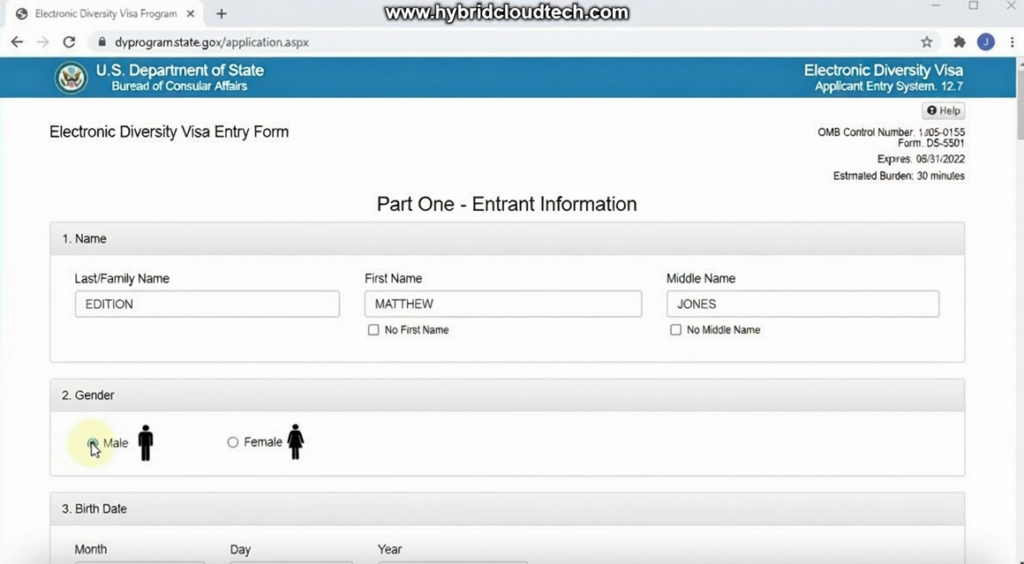
Illustration of the US Diversity Visa Lottery application process.
What is the US Diversity Visa Lottery?
The DV Lottery is a congressionally mandated program under Section 203(c) of the Immigration and Nationality Act (INA), administered by the US Department of State. It allocates up to 55,000 immigrant visas annually to promote diversity in US immigration. Eligible countries are those with fewer than 50,000 immigrants to the US in the previous five years. Winners are randomly selected via a computer lottery and can apply for Green Cards, allowing them to live, work, and study in the US permanently, with a path to citizenship after five years.
For fiscal year 2026 (DV-2026), entries were accepted from October 2 to November 7, 2024, before the program’s pause. Nigeria has been ineligible since DV-2023 due to exceeding the 50,000 immigrant threshold, a status that persists. The program is free to enter but requires meeting strict eligibility criteria, including high school education or equivalent work experience.
Current US Laws on the DV Lottery
Under current US law (INA §203(c)), the DV program remains active but subject to annual adjustments. Key rules:
- Eligibility: Applicants must be natives of qualifying countries (Nigeria is not, as per the 2024-2026 lists), have at least a high school diploma or two years of qualifying work experience in the last five years, and meet health and security checks.
- Application Period: Typically October to November each year for the following fiscal year’s visas (e.g., DV-2026 entries in 2024 for visas issued October 2025-September 2026).
- Family Inclusion: Winners can include spouses and unmarried children under 21.
- Quotas: No country can receive more than 7% of visas; regions are allocated based on historical immigration patterns.
- Post-Selection: Winners submit DS-260 forms, undergo interviews at US embassies, and pay fees (about $330 per person as of 2026). Visas must be issued by September 30 of the fiscal year.
However, on December 18, 2025, the Trump administration paused the entire DV program indefinitely, halting visa issuances and processing due to security concerns following incidents involving DV immigrants. This affects DV-2026 selectees (results announced May 2025) and future lotteries like DV-2027 (originally planned for October 2025 but delayed and now paused). No new entries are being accepted, and existing applications are on hold.
Trump’s Views and Decisions on Nigerian Immigration
President Donald Trump, in his second term (2025-2029), has consistently advocated for restrictive immigration policies, emphasizing national security, economic protectionism, and “America First.” Regarding Nigerians, Trump’s views stem from concerns over visa overstays, security risks, and public charge burdens.
- Past Actions (2017-2021): In 2020, Trump imposed a partial ban on Nigerian immigrant visas, citing high overstay rates (5-11% for various visa types) and inadequate information sharing on security. This barred most family-based and employment-based immigrant visas but spared nonimmigrant visas like student (F/M/J) and tourist (B1/B2). The ban was lifted by Biden in 2021.
- Current Decisions (2025-2026): Upon returning to office, Trump issued Proclamation 10998 on December 16, 2025, expanding travel bans effective January 1, 2026. For Nigeria, this partially suspends immigrant visas and nonimmigrant B1/B2 (tourist/business), F/M (student), and J (exchange) visas, with exceptions for diplomats, certain officials, and humanitarian cases. Over 100,000 visas have been revoked since 2025 for crimes like assault and DUI. The DV pause (December 18, 2025) aligns with Trump’s security focus, triggered by incidents involving DV holders.
Trump’s rationale: Nigerians pose risks due to terrorism (e.g., Boko Haram), overstay rates, and insufficient vetting cooperation. He has publicly stated intentions to “protect American jobs and security” by limiting low-skilled immigration. As of January 2026, these policies have halted most Nigerian pathways to US residency, affecting students, tourists, and families.
How to Apply for the DV Lottery from Nigeria (Pre-Pause Process)
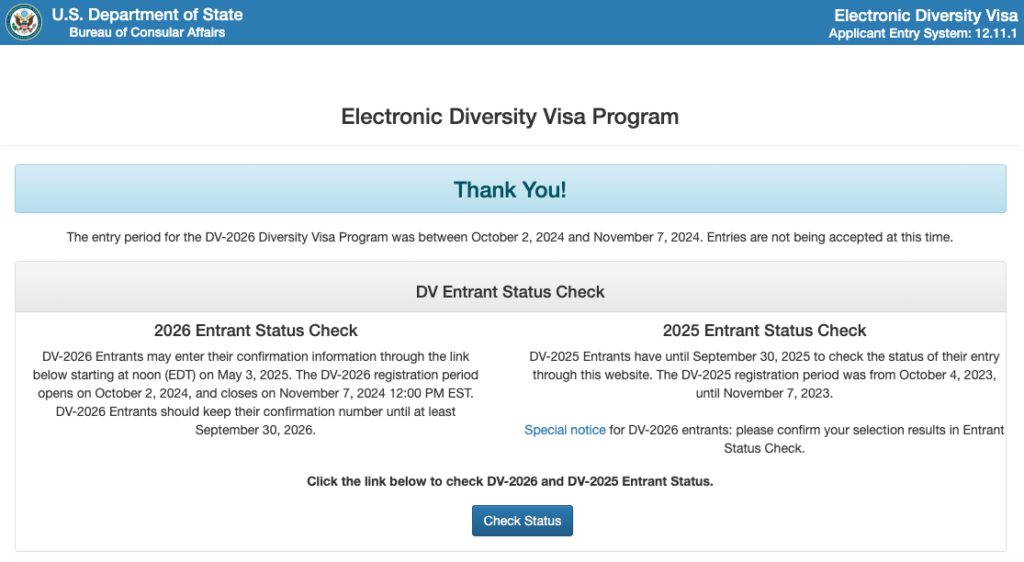
Although Nigeria is ineligible and the program is paused, understanding the process is useful for potential future reopenings or similar programs. Applications were free and online-only. First, you have to visit https://dvprogram.state.gov/ to access the application page.
- Check Eligibility: Confirm birth in a qualifying country (spouse or parent’s eligibility can qualify you if Nigeria ineligible). Age 18+, high school education or 2 years work in skilled job.
- Entry Period: Typically October-November (e.g., DV-2026: Oct 2-Nov 7, 2024).
- Online Application: Visit dvprogram.state.gov. Fill E-DV form with personal details, photo (strict specs: 600×600 pixels, neutral background, no glasses/headwear except religious). One entry per person; multiples disqualify.
- Confirmation: Receive unique confirmation number; save it.
- Results Check: May following year on dvprogram.state.gov (e.g., DV-2026 results May 2025-September 2026).
- Post-Selection: If selected, submit DS-260 online, attend embassy interview in Abuja or Lagos, provide police certificates, medical exam, and pay fees.
From Nigeria, use reliable internet; avoid agents to prevent fraud.
Do’s and Don’ts for DV Lottery Application
What you should Do:
- Apply during the exact period using the official site.
- Use a recent photo meeting specs (check photo tool on site).
- Enter accurate information; errors disqualify.
- Keep confirmation number secure.
- If selected, prepare documents early (affidavit of support, education proofs).
What Applicants Shouldn’t Do:
- Submit multiple entries (automatic disqualification).
- Use agents or pay for entry (it’s free; scams common in Nigeria).
- Lie about eligibility or details (fraud leads to permanent ban).
- Miss deadlines for DS-260 or interview.
- Assume selection guarantees visa (only ~50% of selectees get visas due to quotas and checks).
How can Nigerians Can Find Alternative Routes?
With DV paused and bans in place, alternatives include application for the following:
- Nonimmigrant Visas: If not restricted, apply for H-1B (specialty jobs), L-1 (intracompany transfers), or O-1 (extraordinary ability). Use ESTA if eligible (rare for Nigerians).
- Family/Employment Sponsorship: If US relatives or job offers, pursue family-based (e.g., spouse) or EB visas.
- Study Abroad: Consider Canada, UK, or Germany for easier student visas.
- Asylum/Refugee: If persecuted, apply via UNHCR in Nigeria.
- Build Profile: Gain skills/education for merit-based paths; network via LinkedIn for US jobs.
- Stay Informed: Monitor usvisas.state.gov and Nigerian embassy alerts.
What Nigerian Government Can Do for Citizens to Enhance Travel Abroad
Nigeria can enhance mobility:
- Diplomatic Efforts: Negotiate visa waivers (e.g., expand ECOWAS passport benefits) or reciprocal agreements.
- Improve Passport Strength: Combat corruption/fraud to boost Henley Index ranking (currently low).
- Citizen Support: Subsidize education abroad, provide travel grants, or partner with diaspora for sponsorships.
- Digital Platforms: Develop apps for visa applications, like FRSC’s NVIS for domestic.
- Bilateral Ties: Strengthen US-Nigeria relations via trade (AGOA) to ease bans.
Conclusion
The DV Lottery, once a viable option, is paused amid Trump’s restrictive policies, severely limiting Nigerian access. Focus on alternatives, stay compliant, and advocate for reforms. For latest updates, consult official sources—immigration landscapes change rapidly.