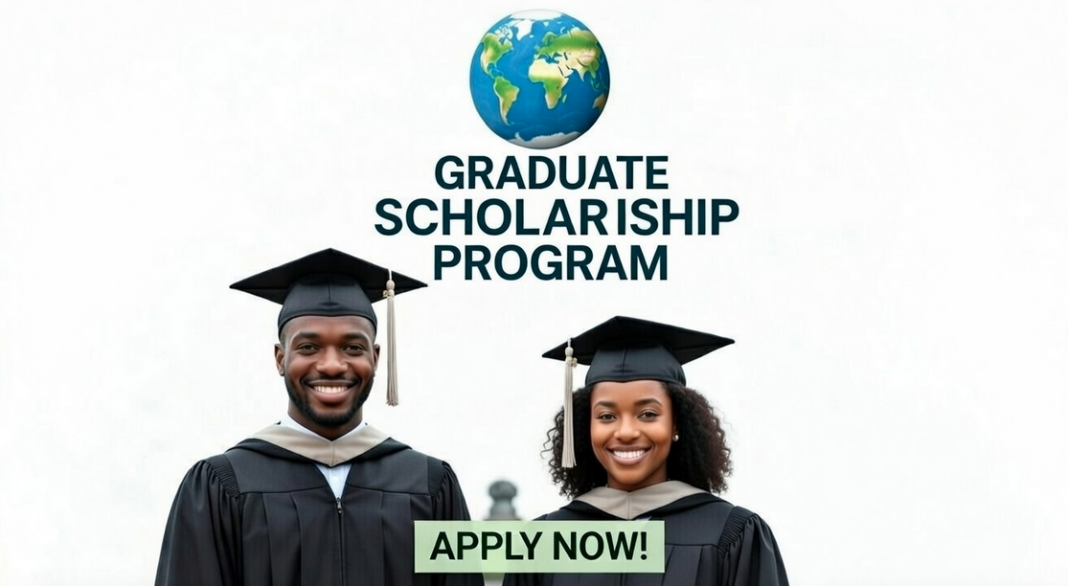

We all know that higher education is increasingly seen as a gateway to global opportunities, therefore scholarships for graduate students play a very important role in making advanced studies accessible to people across the globe. As we enter 2026, graduate scholarships has grown significantly, influenced by factors such as geopolitical shifts, economic recovery post-pandemic, and a heightened emphasis on sustainable development, STEM fields, and inclusivity.
According to recent data from the Institute of International Education (IIE), over 1.1 million international students pursued graduate degrees globally in 2025, with scholarships covering more than 40% of their funding needs. For students from developing nations like Nigeria, Ghana, South Africa etc, these opportunities are not just financial aids but lifelines that enable pursuit of Master’s, PhD, or postdoctoral programs in prestigious institutions.
This year promises different type of scholarships tailored for graduate students, many of which are fully funded or offer substantial support including tuition, living stipends, travel allowances, and health insurance. These programs are sponsored by governments, universities, foundations, and international organizations, each with unique focuses—ranging from leadership development to research in cutting-edge technologies. For Nigerians, these scholarships are particularly relevant, as many prioritize applicants from Africa, offering pathways to overcome visa challenges and economic barriers.
Choosing the Best School that Suites your Academics
The main reason of this article is to provide a full explanation into the 10 best scholarships for graduate students in 2026, selected based on factors like funding level, prestige, accessibility, and impact. Criteria for selection include global reputation (e.g., from QS World University Rankings 2026), funding comprehensiveness (full vs. partial), eligibility openness (especially for Africans), and application success rates.
For each scholarship, we provide a full explanation of the sponsoring school or organization, including its history, mission, and notable programs. We also detail the application process step-by-step, covering eligibility, required documents, deadlines, selection criteria, and tips for success. Additionally, we discuss benefits, potential challenges, and how these align with global trends like AI ethics, climate change, and equity in education.
Whether you’re a prospective PhD candidate in engineering or a Master’s student in public policy, these scholarships represent the pinnacle of international funding. With application cycles often opening in mid-2026 for 2027 intakes, early preparation is key. Let’s explore each one in depth.
1. Chevening Scholarships (United Kingdom)

A Strategic Guide to passing your Chevening Scholarship Interview: The Chevening Scholarships, administered by the UK Foreign, Commonwealth & Development Office (FCDO), are among the most prestigious global awards for graduate students. Established in 1983 as the Foreign and Commonwealth Office Awards Scheme, Chevening has evolved into a flagship program funding over 50,000 scholars from 160+ countries. It honors Sir Christopher Chevening, a fictional diplomat from a novel, but in practice, it embodies the UK’s soft power strategy to foster future leaders who can influence positive change in their home countries.
Chevening partners with over 150 top UK universities, including Oxford, Cambridge, LSE, Imperial College London, and University of Edinburgh. These institutions are renowned for their research excellence—Oxford ranks #1 in QS 2026 for humanities, while Imperial leads in engineering. Programs span Master’s degrees (typically 1 year) in fields like public policy, international relations, business, law, STEM, and sustainable development. For Nigerians, Chevening is highly accessible, with Nigeria consistently among the top recipient countries (over 1,500 alumni since inception).
Eligibility to Apply for Chevening Scholarships:
Open to citizens of Chevening-eligible countries (including Nigeria), with at least two years’ work experience, a bachelor’s degree (upper second-class honors or equivalent), and English proficiency (IELTS 6.5+ or equivalent). Applicants must commit to returning home for two years post-study.
Benefits of Chevening Scholarships:
Fully funded—covers tuition (up to £18,000-£30,000), monthly stipend (£1,200-£1,500), airfare, visa costs, and allowances for books/events (total value ~£40,000-£60,000 per scholar). Networking events and alumni support included.
Application Process Chevening Scholarships:
- Preparation (March-June 2026): Research UK universities and courses via UCAS or Chevening website. Ensure your profile aligns with Chevening’s pillars: Leadership, Networking, Studying in the UK, and Career Plan. For Nigerians, highlight contributions to national development (e.g., SDGs).
- Online Application (August 1-November 5, 2026): Register on chevening.org. Submit personal details, academic transcripts, two references (professional/academic), and essays (500 words each) on leadership, networking, study choice, and career plan. Upload passport, CV, and English test scores.
- Shortlisting (November 2026-January 2027): Applications reviewed by UK embassies (in Abuja for Nigerians). Shortlisted candidates notified via email.
- Interviews (February-March 2027): Virtual or in-person at British High Commission. Panel assesses fit; prepare for questions on Nigeria’s challenges and your solutions. Please note that Interviews for 2025 applicants is from (February-March 2027).
- Conditional Offers (April 2027): Successful candidates get offers pending university acceptance. Meanwhile, offers for 2025 applicants will commence in April 2026.
- University Applications (Parallel): Apply to three UK courses; Chevening assists with placements.
- Final Selection and Pre-Departure (June-August 2027): Confirm funding; attend orientations. All 2025 Applicants will get their final selection in 2026.
Deadlines for Chevening Scholarships:
Applications open August 2026; close November 5, 2026. Results by June 2027.
Selection Criteria for Chevening Scholarships:
Emphasis on leadership potential (40%), academic merit (30%), and alignment with UK priorities (30%). Nigerians succeed by tying applications to local issues like energy or tech innovation.
Tips: Network with alumni via LinkedIn; tailor essays to show impact. For Martins in Abuja, leverage proximity to the British High Commission for events.
Challenges: Highly competitive (1-2% success rate); requires strong English and work experience.
2. Vanier Canada Graduate Scholarships (Canada)
The Vanier Canada Graduate Scholarships (Vanier CGS), named after former Governor General Georges Vanier, were launched in 2008 by the Canadian government to attract top doctoral talent. Administered by Canada’s three federal granting agencies—Canadian Institutes of Health Research (CIHR), Natural Sciences and Engineering Research Council (NSERC), and Social Sciences and Humanities Research Council (SSHRC)—the program supports PhD studies at over 100 Canadian universities, including University of Toronto (ranked #18 QS 2026), McGill (#24), and UBC (#34). These institutions excel in research, with Toronto leading in AI and health sciences, McGill in medicine, and UBC in environmental studies.
Vanier aims to position Canada as a global research hub, funding 166 scholarships annually across health, natural sciences/engineering, and social sciences/humanities. For Nigerians, it’s appealing due to Canada’s welcoming immigration policies and post-study work options.
Eligibility to Apply for Vanier Canada Graduate Scholarships:
Open to international students (including Nigerians) pursuing full-time PhD (or combined MA/PhD/MD/PhD) at eligible Canadian institutions. Must demonstrate leadership, research potential, and academic excellence (first-class average). Not for professional degrees like JD or MD alone.
Benefits of Vanier Canada Graduate Scholarships:
$50,000 CAD per year for three years (total $150,000 CAD), covering tuition, living expenses, and research costs. Additional support for travel/conferences.
Application Process for Vanier Canada Graduate Scholarships:
- Nomination by Institution (April-July 2025): Contact a Canadian university’s graduate office; secure a faculty supervisor and departmental nomination. For Nigerians, apply early as spots are limited.
- Online Submission (September 1-November 1, 2025): Use ResearchNet portal. Submit transcripts, CV, research proposal (2 pages), leadership statement (2 pages), and two references.
- Agency Review (November 2025-March 2026): Applications forwarded to CIHR/NSERC/SSHRC based on field; peer-reviewed for academic excellence (50%), research potential (30%), leadership (20%).
- Results Announcement (April 2026): Successful candidates notified; accept and enroll by September 2026.
- Activation: Funding starts upon enrollment; annual progress reports required.
Deadlines: Institutional nominations by early September 2025; full application November 1, 2025.
Selection Criteria: Holistic evaluation; Nigerians stand out with proposals addressing global issues like climate change or public health.
Tips: Build a strong supervisor relationship; highlight NIN-linked achievements. Abuja-based applicants can use Canadian High Commission resources.
Challenges: Requires university nomination; competition intense (15% success rate).
3. Rhodes Scholarships (University of Oxford, United Kingdom)
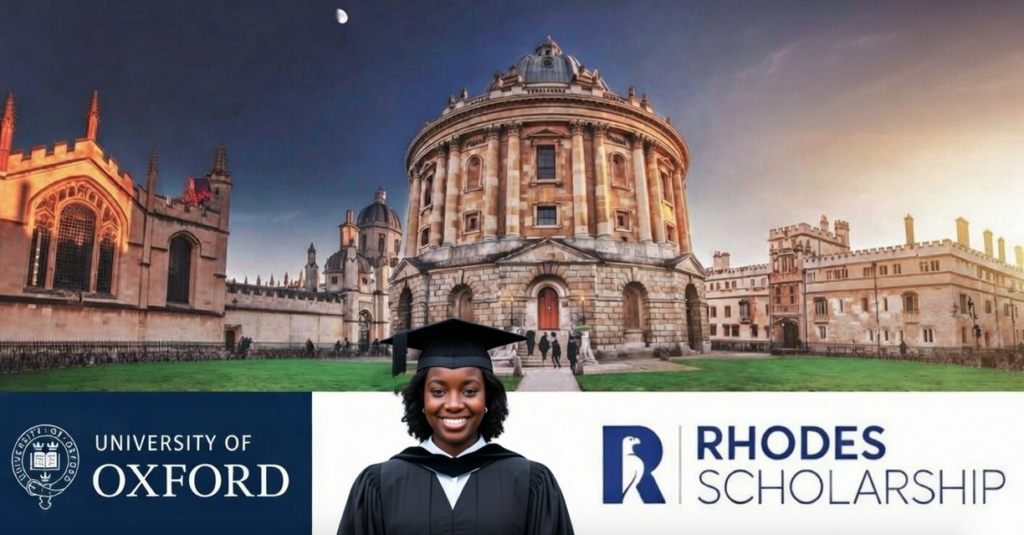
The Rhodes Scholarships, founded in 1902 by Cecil Rhodes’ will, are the world’s oldest and most prestigious international scholarship program. Administered by the Rhodes Trust, they fund postgraduate studies at the University of Oxford, ranked #1 in QS 2026 for overall excellence. Oxford, established in 1096, is renowned for its tutorial system, research output (e.g., COVID vaccine development), and alumni like 30 UK prime ministers and Bill Clinton. Programs include Master’s (1-2 years) and PhD (3-4 years) in humanities, sciences, law, and social sciences.
Rhodes selects 100 scholars annually from 20+ constituencies, including Africa (10 slots, with Nigeria eligible). It emphasizes character, intellect, and leadership.
Eligibility to Apply for Rhodes Scholarships:
Citizens of eligible countries (Nigeria included), aged 18-25 (or up to 28 for PhD), with a bachelor’s degree (first-class or equivalent). Applicants must demonstrate moral force of character and commitment to service.
Benefits of Rhodes Scholarships:
Full tuition, stipend (£18,000/year), health insurance, airfare, and settling-in allowance (total ~£80,000-£120,000 for Master’s/PhD). Leadership development programs included.
Application Process for Rhodes Scholarships:
- Preparation (January-June 2026): Research Oxford courses; secure endorsements from university officials.
- Online Application (July 1-September 1, 2026): Submit via rhodeshouse.ox.ac.uk. Include CV, transcripts, personal statement (1,000 words on aspirations), academic statement (750 words), and six references.
- Shortlisting (September-October 2026): National committees review; Nigerians apply through the Africa constituency.
- Interviews (November 2026): Two rounds—social dinner and panel interview assessing intellect and character.
- Selection (November 2026): Winners announced; apply to Oxford courses.
- Enrollment (October 2027): Start studies; participate in Rhodes House events.
Deadlines: Vary by constituency; Nigeria: September 1, 2026.
Selection Criteria: Academic excellence (40%), leadership (30%), character (20%), extracurriculars (10%).
Tips: For Nigerians, tie applications to national challenges like governance or innovation. Attend webinars by Rhodes Trust.
Challenges: Extremely competitive (1% success rate); requires exceptional all-round profile.
4. Fulbright Foreign Student Program (United States)
The Fulbright Program, established in 1946 by Senator J. William Fulbright, is the US government’s flagship international educational exchange initiative. Sponsored by the US Department of State, it operates in 160+ countries, funding graduate studies at over 4,000 US universities, including Harvard (#4 QS 2026), Stanford (#5), and MIT (#1 for engineering). These schools are hubs of innovation, with Harvard’s endowment at $50 billion supporting research in all disciplines.
Fulbright awards about 8,000 grants globally, with Nigeria receiving 20-30 slots for Master’s/PhD in fields like education, public health, and STEM.
Eligibility to Apply for Fulbright Foreign Student Program:
Nigerian citizens with bachelor’s degree, strong academic record, English proficiency (TOEFL 80+), and leadership potential. No age limit; work experience preferred.
Benefits of Fulbright Foreign Student Program:
Full tuition, stipend ($1,200-2,500/month), health insurance, airfare, and professional development (value ~$40,000-100,000/year).
Application Process of Fulbright Foreign Student Program:
- Preparation (January-May 2026): Identify US programs; prepare GRE/TOEFL if required.
- Online Application (February-June 2026): Via IIE/Fulbright portal. Submit essays (study objectives, personal statement), CV, transcripts, three references.
- Shortlisting (July-August 2026): US Embassy in Abuja reviews; Nigerians interviewed locally.
- Interviews (September 2026): Panel assesses fit and cultural ambassadorship.
- Placement (October 2026-March 2027): IIE matches with universities; apply to up to three.
- Pre-Departure (June-August 2027): Orientation; visa processing.
Deadlines: Nigeria: June 1, 2026.
Selection Criteria: Academic merit (40%), project feasibility (30%), leadership (30%).
Tips: Highlight how your study benefits Nigeria; leverage US Embassy resources in Abuja.
Challenges: US visa bans (2026) may delay; high competition.
5. Erasmus Mundus Joint Masters Degrees (European Union)
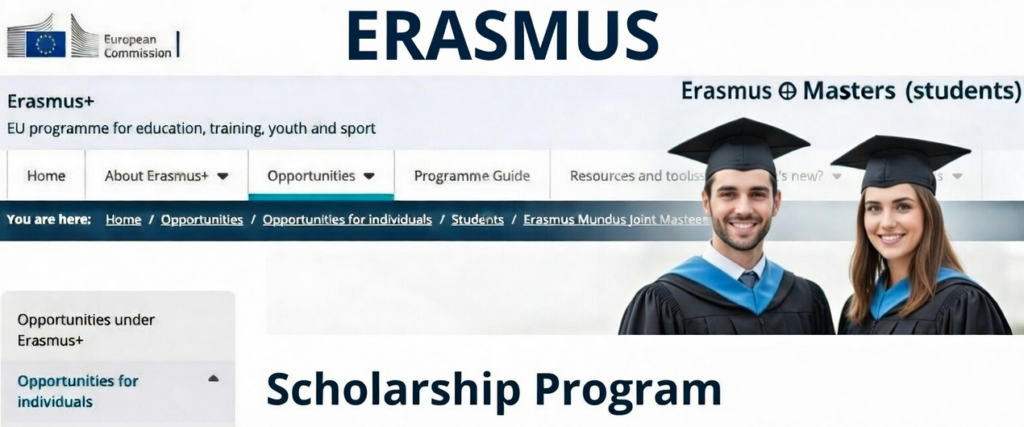
Erasmus Mundus, part of the EU’s Erasmus+ program since 2004, funds joint Master’s programs across 2-3 European universities. In 2026, over 150 consortia offer degrees in fields like environmental science, AI, and public health. Partner institutions include Sorbonne (France, #59 QS), Heidelberg (Germany, #84), and Bologna (Italy, #111), known for collaborative research and mobility.
The program awards 2,500 scholarships annually, with Africans (including Nigerians) prioritized under EMJMD. Apply for an Erasmus Mundus Joint Master. Students from all over the world are welcome. You will study at several universities in Europe and beyond. Full scholarships are available for the best students. Masters may also offer full scholarships to the best-ranked students worldwide. Scholarships cover your participation costs and contribute to a living allowance, travel as well as visa.
Eligibility to Apply for Erasmus Mundus Joint Masters Degrees:
Bachelor’s degree, English/French proficiency, relevant experience. Open to all nationalities.
Benefits of Erasmus Mundus Joint Masters Degrees:
Full tuition (€4,500-9,000/year), stipend (€1,000/month), travel (€2,000-3,000/year), installation (€1,000), total €25,000-50,000 per program (1-2 years).
Application Process for Erasmus Mundus Joint Masters Degrees:
A new batch of selected Erasmus Mundus Masters is added to the list each year. In most cases, you should submit your application between October and January for courses starting the following academic year. Each master’s website has all the details about the course of study, the list of the participating universities, the entry requirements and all the steps of the application process (with and without scholarship).
- Choose Program (January-March 2026): Browse ec.europa.eu/programmes/erasmus-plus; select consortium.
- Online Application (October 2026-February 2027): Submit via program portal; include CV, motivation letter, transcripts, two references, language test.
- Shortlisting (March-April 2027): Consortia review; interviews if needed.
- Results (May 2027): Notifications; accept and enroll.
- Mobility (September 2027): Start studies; rotate between countries.
Deadlines: Vary by program; typically January-March 2026.
Selection Criteria: Academic excellence (50%), motivation (30%), experience (20%).
Tips: Nigerians can emphasize diversity; use EU delegation in Abuja for info.
Challenges: Visa for multiple EU countries; competitive (10-15% rate).
The Erasmus Mundus Association has resources to help you apply, including course contacts, events with national volunteer representatives, and stories from successful applicants.
6. Swiss Government Excellence Scholarship (Switzerland)

Launched in 1957 by the Swiss Federal Commission for Scholarships, this program supports PhD, postdoctoral, and research fellowships at Swiss universities like ETH Zurich (#7 QS for engineering) and University of Zurich (#76). Switzerland’s institutions excel in innovation, with ETH leading in quantum computing and sustainability.
In 2026, 180 scholarships are available, with Africa allocated 20 slots.
Eligibility to Apply for Swiss Government Excellence Scholarship:
Nigerians with Master’s/PhD, under 35 for PhD, research proposal aligned with Swiss priorities.
Benefits for Swiss Government Excellence Scholarship:
Monthly stipend (CHF 1,920-3,500), tuition waiver, health insurance, airfare (value CHF 20,000-50,000/year).
Application Process for Swiss Government Excellence Scholarship:
- Proposal Development (April-July 2026): Find Swiss supervisor via university sites.
- Submission (September-November 2026): Via Swiss Embassy in Abuja; include CV, research plan, letters of support.
- Review (December 2026-March 2027): Swiss committees assess.
- Results (May 2027): Notifications; visa process.
- Start (September 2027): Enroll and research.
Deadlines: November, 2026.
Selection Criteria: Research quality (60%), academic merit (40%).
Tips: Focus on Swiss-Nigerian collaborations; visit embassy in Abuja.
Challenges: Language (German/French/Italian in some areas); rigorous proposal.
7. Commonwealth Scholarships (United Kingdom and Commonwealth Countries)
Established in 1959 under the Commonwealth Scholarship and Fellowship Plan (CSFP), this program funds graduate studies in 56 Commonwealth nations, primarily the UK. Administered by the Commonwealth Scholarship Commission (CSC), it partners with universities like Cambridge (#3 QS) and Manchester (#27). CSC emphasizes development impact, with programs in education, health, and governance.
For 2026, 800 awards, with Nigeria eligible for 20-30.
Eligibility to Apply for Commonwealth Scholarships:
Commonwealth citizens (Nigeria included), with bachelor’s, for Master’s/PhD.
Benefits of Commonwealth Scholarships:
Full tuition, stipend (£1,236/month), airfare, thesis grant (value £40,000-80,000).
Application Process for Commonwealth Scholarships:
- Nomination (April-June 2026): Via NEPC or university in Nigeria.
- Online Application (September-December 2026): CSC portal; essays on development impact, study plan.
- Shortlisting (January-February 2027): CSC reviews.
- Interviews (March 2027): Virtual.
- Results (May 2027): Awards; university placement.
- Start (September 2027): Studies begin.
Deadlines: December 2026.
Selection Criteria: Development relevance (50%), academic (30%), leadership (20%).
Tips: Align with SDGs; use Nigerian CSC alumni network.
Challenges: Post-study return requirement.
8. DAAD Scholarships (Germany Academic Exchange Service)
The German Academic Exchange Service (DAAD), founded in 1925, is the world’s largest funding organization for international exchange, supporting 100,000+ students yearly. Scholarships fund Master’s/PhD at German universities like Technical University of Munich (#28 QS) and Heidelberg (#84), leaders in engineering and life sciences.
DAAD offers 500+ programs, with Africans prioritized.
Eligibility to Apply for DAAD Scholarships:
Nigerians with bachelor’s, for postgraduate, with relevant experience. DAAD are aimed primarily at graduates, doctoral students and and are awarded for study and research visits to universities and non-university research institutions in Germany. In some programmes, are also funded.
Benefits of DAAD Scholarships:
€934/month stipend, tuition waiver, insurance, travel (value €15,000-30,000/year).
Application Process for DAAD Scholarships:
If you wish to apply for a DAAD scholarship, please read the call for applications for your chosen scholarship programme in the
DAAD scholarship database, paying particular attention to application deadlines.
- Program Search (January-May 2026): througha daad.de; find course.
- Application (June-October 2026): Portal submission; CV, motivation, proposal, references.
- Review (November 2026-February 2027): DAAD panels.
- Results (March 2027): Notifications.
- Pre-Departure (April-August 2027): Language courses if needed.
- Start (October 2027): Enroll.
Deadlines: It usually varies; but it typically ends in October 2026.
Selection Criteria: Academic (50%), proposal (30%), motivation (20%).
Tips: Learn basic German; focus on Nigeria-Germany ties.
Challenges: Language barrier; competitive.
A comprehensive overview of DAAD scholarship programmes is available in our scholarship database:
www.funding-guide.de.
9. Gates Cambridge Scholarships (United Kingdom)
Funded by the Bill and Melinda Gates Foundation since 2000, this program supports PhD/Master’s at the University of Cambridge (#3 QS 2026). Cambridge, founded in 1209, excels in biotech, AI, and humanities, with alumni like Newton and Hawking.
Awards 80 scholarships annually, open to all nationalities.
Eligibility to Apply for Gates Cambridge Scholarships:
Outstanding intellect, leadership, commitment to improving lives.
Benefits of Gates Cambridge Scholarships:
Full tuition, stipend (£20,000/year), airfare, family allowance (value £50,000-100,000).
Application Process for Gates Cambridge Scholarships:
- Preparation (April-July 2026): Research Cambridge courses.
- Online Application (September-December 2026): Via Cambridge portal; Gates statement (500 words), research proposal, references.
- Shortlisting (January 2026): Departmental ranking.
- Interviews (February-March 2026): Virtual panels.
- Results (April 2027): Offers.
- Enrollment (October 2027): Start.
Deadlines: December 2026 (international).
Selection Criteria: Intellectual ability (40%), leadership (30%), fit (30%).
Tips: Emphasize global impact; Nigerians succeed in health/AI.
Challenges: Elite competition.
10. Joint Japan/World Bank Graduate Scholarship Program (Various Countries)
Established in 1987 by Japan and the World Bank, JJ/WBGSP funds Master’s in development-related fields at universities in US, Europe, Africa, and Japan (e.g., Harvard Kennedy School, Tokyo University). Focuses on poverty reduction and sustainable development.
Awards 200+ scholarships annually, prioritizing Africans.
Eligibility to Apply for Joint Japan/World Bank Graduate Scholarship Program:
Nigerians from developing countries, 3+ years experience in development, bachelor’s.
Benefits of Joint Japan/World Bank Graduate Scholarship Program:
Tuition, stipend ($30,000/year), travel, insurance (value $50,000-70,000).
Application Process for Joint Japan/World Bank Graduate Scholarship Program:
- Eligibility Check (January-March 2026): Via worldbank.org/scholarships.
- Application (April-May 2026): Online; essays, CV, references.
- Review (June-July 2026): World Bank panels.
- University Placement (August 2026): Matched to programs.
- Results (September 2026): Awards.
- Start (Fall 2027): Enroll.
Deadlines: May 2026.
Selection Criteria: Development experience (50%), academic (30%), potential (20%).
Tips: Tie to Nigeria’s SDGs; use World Bank office in Abuja.
Challenges: Return to home country required.
Conclusion
These 10 scholarships offer great opportunities for graduate students in 2026, covering different fields and regions. With detailed processes outlined, applicants can strategize effectively. Success demands early preparation, strong narratives, and alignment with global priorities. As education costs rise (average US Master’s $60,000/year), these fully funded options democratize access. For Nigerians, leveraging local resources and diaspora networks is key. Stay updated via official sites—your future awaits.