

Nigeria’s tax system has long been a cornerstone of its economic framework, yet it remains one of the most debated aspects of governance. As Africa’s most populous nation and largest economy, Nigeria relies on taxation to fund public services, infrastructure, and development initiatives.
However, the system has historically been plagued by inefficiencies, fragmentation, and low compliance rates, with a tax-to-GDP ratio hovering around 9-13%—far below the African average of 16.5% and the global benchmark for emerging markets. This has forced successive governments to depend heavily on oil revenues, which are volatile and insufficient to meet the demands of a growing population exceeding 220 million.
Enter the administration of President Bola Ahmed Tinubu, who assumed office in May 2023 amid economic turmoil, including high inflation, currency devaluation, and mounting debt. Tinubu’s fiscal agenda has been aggressive, marked by the removal of fuel subsidies, unification of the foreign exchange market, and a sweeping overhaul of the tax system.
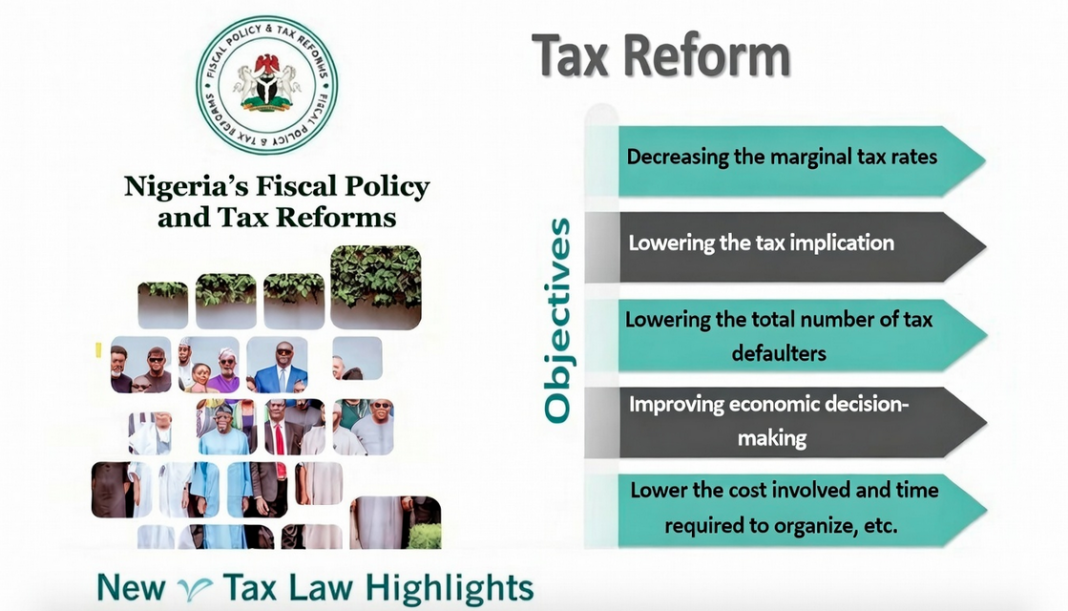
In June 2025, he signed four landmark bills into law: the Nigeria Tax Act 2025, Nigeria Tax Administration Act 2025, Nigeria Revenue Service (Establishment) Act 2025, and Joint Revenue Board (Establishment) Act 2025.
These reforms, effective largely from January 1, 2026, aim to consolidate over 60 disparate taxes into fewer than 10, broaden the tax base, enhance compliance, and promote equity. Proponents hail them as a “once-in-a-generation” reset, while critics decry them as burdensome and potentially unconstitutional due to alleged post-legislative alterations.
About this Tax Article
This article explains Nigeria’s tax system, tracing its historical roots, analyzing the current structure, and examining the Tinubu-era reforms. It describes the new laws in detail, unpacks the surrounding controversies—including political opposition, public protests, and implementation challenges—and assesses their economic, social, and political impacts.
Drawing from official sources, expert analyses, and recent developments as of January 2026, the piece provides a comprehensive view for policymakers, businesses, and citizens. With Nigeria’s economy projected to grow at 4.4% in 2026 by the World Bank—partly attributed to these reforms—the stakes could not be higher. Yet, amid trust deficits and reform fatigue, the path forward remains fraught with uncertainty.
Now, lets discuss the Nigeria Tax system, new laws, controversies, the President Bola Ahmed Tinubu, whose administration has spearheaded the most ambitious tax overhaul in decades.
Historical Context of Nigeria’s Tax System
Nigeria’s tax system has evolved significantly since colonial times, reflecting shifts in economic priorities, political structures, and global influences. During British rule (1861-1960), taxation was primarily extractive, focused on funding colonial administration through customs duties, hut taxes, and poll taxes.
The Native Revenue Ordinance of 1917 formalized direct taxation in the North, while the South adopted similar measures in the 1920s. These early systems were regressive, burdening the poor disproportionately and sparking resistance, such as the 1929 Aba Women’s Riot against warrant chiefs’ tax impositions.
Post-independence in 1960, Nigeria inherited a federal structure where taxes were divided among federal, state, and local governments. The 1960 Constitution allocated income taxes to regions, while the federal government handled customs and excise. The military era (1966-1999) centralized power, leading to the establishment of the Federal Inland Revenue Service (FIRS) in 1993 via Decree No. 3.
Taxation Issues
This period saw the introduction of key laws like the Companies Income Tax Act (CITA) 1979, Personal Income Tax Decree 1993, and Value Added Tax (VAT) Decree 1993, which replaced sales tax with a 5% VAT rate (later increased to 7.5% in 2020).
The return to democracy in 1999 brought decentralization debates, with states gaining more control over personal income tax (PIT) via the Personal Income Tax Act (PITA) 2011. However, fragmentation persisted: over 60 taxes and levies across tiers of government led to multiple taxation, evasion, and low revenue.
By the 2010s, Nigeria’s tax-to-GDP ratio was among the world’s lowest, prompting reforms under Presidents Goodluck Jonathan and Muhammadu Buhari. Initiatives like the Voluntary Assets and Income Declaration Scheme (VAIDS) in 2017 and Finance Acts (2019-2021) aimed to broaden the base, introduce digital taxation for tech giants, and incentivize compliance.
Despite these efforts, challenges endured. Oil dependency meant non-oil taxes contributed only about 40% of revenue, with corruption scandals—like the 2012 fuel subsidy fraud—eroding public trust. The COVID-19 pandemic exacerbated fiscal strains, leading to emergency measures such as temporary VAT exemptions on essentials.
By 2023, when Tinubu took office, debt service consumed over 60% of revenues, underscoring the urgency for reform. His administration’s approach builds on predecessors but is more comprehensive, consolidating laws and emphasizing progressivity to address inequality in a nation where over 133 million live in multidimensional poverty.
This historical backdrop highlights a recurring issue. This is to say that taxation in Nigeria is not just fiscal but deeply political, intertwined with federalism, equity, and governance. The Tinubu reforms represent the latest chapter, aiming to break the “rentier cycle” of oil reliance through a modern, inclusive system.
Overview of the Current Nigerian’s Tax System
Nigeria’s tax system operates under a federal framework, with revenues shared via the Federation Account Allocation Committee (FAAC). The Nigeria Revenue Service (NRS, formerly FIRS) administers federal taxes, while State Internal Revenue Services (SIRS) handle state-level ones. Local governments collect minor levies like tenement rates.
Key Nigeria’s Tax system Policies include:
- Corporate Income Tax (CIT): Levied on company profits at 30% for large firms (turnover > ₦100 million), 20% for medium (₦25-100 million), and 0% for small (<₦25 million). Petroleum companies pay Petroleum Profits Tax (PPT) at 50-85%. Deductions include capital allowances, but minimum tax was abolished in 2026.
- Personal Income Tax (PIT): Progressive, now exempting incomes up to ₦800,000 annually, with rates from 15% (₦800,001-₦3 million) to 25% (>₦50 million). Pay-As-You-Earn (PAYE) for employees; self-assessment for others. The reformed system replaces Consolidated Relief Allowance with capped rent relief.
- Value-Added Tax (VAT): 7.5% on goods and services, with exemptions for basic food, medical supplies, education, and exports. Administered federally but shared 15% federal, 50% states, 35% local (derivation-based).
- Withholding Tax (WHT): 5-10% on dividends, interest, royalties, and contracts; creditable against final liability.
- Capital Gains Tax (CGT): 10% on asset disposals, with exemptions for personal residences (<₦150 million proceeds) and low-value gains.
- Other Levies: Stamp duties, education tax (2.5% on profits), and new 4% Development Levy on medium/large companies’ assessable profits.
The system is digitized via platforms like TaxPro-Max for filings and payments. However, low digital literacy and informal sector dominance (over 80% of economy) hinder compliance. Tax treaties with 15 countries (e.g., UK, China) reduce double taxation, and Nigeria adopted OECD’s Pillar Two global minimum tax in 2023.
Revenue distribution favors oil-producing states via derivation (13%), exacerbating regional inequalities. In 2025, total tax revenue hit ₦15.2 trillion, up 20% year-on-year, but evasion remains rife, with only 10 million active taxpayers out of 220 million people.
A chart illustrating trends in Nigeria’s tax revenue from 2020-2026, showing growth post-reforms.
The Tinubu Administration’s Tax Reforms
President Tinubu’s tax reforms are part of his “Renewed Hope” agenda, launched amid economic inherited challenges: 33% inflation, ₦87 trillion debt, and a 96% debt-to-revenue ratio. In August 2023, he established the Presidential Fiscal Policy and Tax Reforms Committee (PFPTRC), chaired by Taiwo Oyedele, to harmonize taxes, boost non-oil revenue, and align with international standards.
The reforms address a “broken” system: regressive, complex, and unconducive to growth. Key priorities include protecting low-income earners, supporting small businesses, and combating evasion. Tinubu framed them as pro-poor, stating they “protect dignity while strengthening the social contract.”
By June 2025, the bills passed the National Assembly and were signed. Implementation began with institutional changes: FIRS rebranded to NRS, expanding its mandate to all federal taxes, including customs (previously under Nigeria Customs Service).
The reforms consolidate laws, introduce AI-driven approvals, and mandate Tax IDs (using NIN or RC numbers). They exempt 97% of small businesses from CIT and provide VAT relief on essentials. For individuals, the tax-free threshold shields minimum wage earners.
Tinubu’s broader reforms—subsidy removal saving ₦5.4 trillion in 2024, FX unification stabilizing the naira—complement taxation. The World Bank credits these for raising 2026 GDP projections to 4.4%, noting improved investor confidence.
Yet, the rollout faced hurdles: fuel surcharge delays to 2026 amid cost-of-living fears, and resistance from states over revenue sharing. The administration insists on no delays, emphasizing education and stakeholder engagement.
Key Provisions of the Nigeria New Laws and Reform Bill
The four Acts form a cohesive framework:
- Nigeria Tax Act 2025 (NTA): Consolidates CIT, PIT, CGT, VAT, and others. Introduces digital asset taxation, 4% Development Levy, and exemptions (e.g., ₦800,000 PIT threshold, VAT on basics). CGT aligns with PIT rates for individuals (up to 25%), with exemptions for low-value disposals.
- Nigeria Tax Administration Act 2025 (NTAA): Standardizes procedures across tiers, mandates electronic filings, and imposes stiffer penalties for evasion (up to 25% fines, imprisonment). Introduces presumptive taxation for informal sectors and global minimum tax for MNEs.
- Nigeria Revenue Service Act 2025 (NRSA): Establishes NRS as the sole federal collector, with powers for audits and enforcement. Effective June 2025, it absorbs functions from other agencies.
- Joint Revenue Board Act 2025 (JRBA): Creates a board for federal-state coordination, resolving disputes and harmonizing rates to end multiple taxation.
Notable changes: Corporate tax drops to 25% for large firms from April 2026; no more minimum tax; royalty and interest definitions expanded; free-zone incentives tightened (full tax on >25% domestic sales by 2028). Over 50 exemptions benefit the masses, like zero VAT on renewables and education.
These provisions aim for simplicity: one law instead of many, digital compliance, and progressivity. For businesses, reliefs like rent allowances and R&D deductions encourage investment.
Controversies and Challenges
The reforms have ignited fierce debate. Allegations of “smuggled” provisions—changes in gazetted versions not passed by the National Assembly—sparked a constitutional crisis. Rep. Abdulsamad Dasuki claimed discrepancies, prompting the House to release Certified True Copies confirming alterations. Critics like Peter Obi argue the laws are “extortive,” lacking benefits, and should be paused.
Northern leaders opposed derivation-based VAT sharing, fearing revenue loss (North consumes less imported goods). Protests stormed the National Assembly in December 2025, with groups like NANS mobilizing against perceived burdens.
Oyedele faced death threats, highlighting opposition intensity. PDP called the reforms “immoral,” accusing Tinubu of political sabotage. Trust deficits stem from corruption: missing funds and unaccountable spending make Nigerians skeptical of higher taxes funding “jumbo cabinets.”
Implementation risks include digital divides, informal sector resistance, and state-federal tensions. Experts warn of short-term inflation from broader bases, exacerbating living costs post-subsidy removal.
There are several online pictures of Protesters demonstrating against the tax reforms outside the National Assembly in late 2025.
Impacts on Nigeria Tax Bill on Economy and Society
Early impacts are mixed. Positively, reforms have boosted revenue: non-oil collections rose 30% in H2 2025. World Bank and IMF praise the progressive structure for reducing inequality, with exemptions shielding 60% of workers. Investor confidence improved, with FDI up 15% in Q4 2025.
For citizens, low earners gain disposable income, potentially stimulating consumption. Small businesses benefit from exemptions, fostering entrepreneurship. However, high earners and large firms face higher burdens, possibly deterring investment if loopholes persist.
Socially, reforms could strengthen the social contract if revenues fund health and education, but skepticism abounds amid poverty rise (53% in some states). Politically, they risk backlash ahead of 2027 elections, with opposition framing them as anti-people.
Economically, projections show tax-to-GDP rising to 16%, enabling infrastructure spending. Yet, short-term pains—like 25% inflation—could erode gains if not managed.
Similar Taxation Updates
- The Role of The Attorney General in Taxation and Tax-Related Matters
- Tax implications on Cash-out Refinance for Homeowner rental property
- Legal Industry Adopts Cloud Computing for Solicitors & Law Firms
- Benefits of Registering your Business Name with CAC (Corporate Affairs Commission)
Future Outlook for Nigeria Tax Polices
Looking ahead, successful implementation hinges on stakeholder buy-in, digital infrastructure, and anti-corruption measures. States like Kogi and Lagos have adopted harmonized laws, setting examples. The Office of the Tax Ombud will mediate disputes, building trust.
By 2030, if effective, reforms could transform Nigeria into a tax-driven economy, reducing oil dependency. Challenges like climate taxes and digital economy integration loom, requiring adaptive policies.
Conclusion
Nigeria’s tax system, reformed under Tinubu, stands at a crossroads. While promising equity and growth, controversies underscore deep-seated distrust. For success, transparency and tangible benefits are essential. As Tinubu urges, “trust the process”—but Nigerians demand proof.