

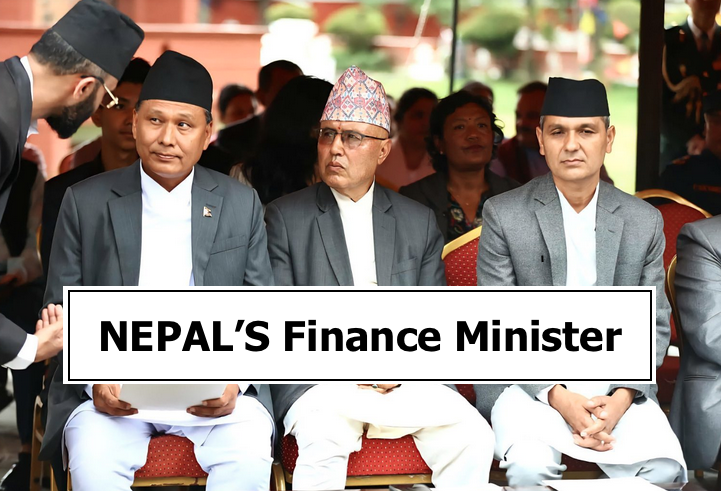

This is a quick update from Nepal Finance Minister who will manage the country’s national budget and economic policy. Rameshore Khanal has been sworn in as the new Nepal’s Finance Minister by the new Prime minister Sushila Karki. This is coming after Bishnu Prasad Paudel, Nepal’s Finance Minister, who was chased, stripped to his underwear, dragged and assaulted by protesters in Butwal. In September 2025, an Anti-government protests over social media ban turn violent, targeting officials in the capital city.
The new Finance minister, Rameshore Khanal is not a typical politician, he’s more of a technocrat, and people know him for being super careful and practical with policies. He’s spent over 30 years in public service, working on things like cooperatives, revenue policy, budgets, and public procurement.
Back when he was in charge at the Finance Ministry, he pushed for better accounting systems and helped improve the revenue-to-GDP ratio. More recently, he led a big economic reform commission that gave solid advice on tax policy, fixing public institutions, and attracting investment. So, with him back in charge, there’s some real hope that Nepal’s finances will be managed more professionally, which could help the country bounce back from political and economic struggles.
What happened to the Previous Finance Minister of Nepal?
Guys, did you see what happened in Nepal? According to reports (like NDTV), Finance Minister Vishnu Prasad Paudel was actually attacked by protesters in Kathmandu a few days ago. There’s a video going around showing him trying to run away, full speed, but then someone literally knocks him down with a flying kick.
There’s another clip online shows a man, believed to be the minister, being dragged through the streets in just his underwear. Protesters even stormed the Foreign Minister’s house and attacked him and his family. The videos are all over social media right now, and it looks pretty chaotic over there.
During the protests, people actually set government buildings on fire, including Parliament House, the Presidential residence, and even private homes of politicians. Sadly, the wife of former PM Jhalanath Khanal passed away at her home in the chaos.
This whole movement is being called the “Z Generation protest.” It kicked off after the government blocked Facebook, Instagram, YouTube, and other social media starting from the 5th, saying they were being misused for hate speech, fake news, and scams. But for Gen Z, who basically live online, that was the last straw. They hit the streets with signs like “Stop Corruption, Not SNS” and “Lift the Social Media Ban.”
And now, in a wild twist, the Presidential Office announced they’ll appoint Sushila Karki, the 73-year-old former Chief Justice who the protesters actually support, as interim Prime Minister. In Nepal’s system, remember, the PM holds real executive power while the President is more ceremonial, so this is a big shift.
What will be the Job of Rameshwar Khanal as Nepal’s Finance Minister?
Now that Rameshwar Khanal is the new finance minister, he will be the head of the Ministry of Finance of the Government of Nepal. His first primary role is to manage Nepal’s national budget and economic policy. He will oversee the government’s revenue and expenditure, advise the government on financial matters, and be in charge of regulating financial institutions to ensure economic development and stability. He will always interact with international bodies and the public. Rameshwar Khanal responsibilities include preparing the national budget, managing public debt, collecting taxes, and ensuring the efficient and transparent use of state resources.
Key Responsibilities of Rameshore Khanal as a Finance Minister in Nepal:
- Budgetary Management: Rameshore Khanal will prepares and oversee the execution of the national budget, managing revenues and expenditures to align with economic policy of Nepal.
- Economic Policy and Advice: Rameshore Khanal along with his team will provide expert advice to the government on economic and financial policies aimed at fostering economic growth and stability.
- Financial Regulation: Rameshore Khanal will supervise financial institutions like banks, insurance companies, and pension funds, and may also regulate specific economic sectors.
- Revenue Collection: Rameshore Khanal will oversee the collection of taxes and other government revenue.
- Public Finance Management: Rameshore Khanal will ensure that public funds are managed transparently and efficiently, often enforcing regulations for other ministries and agencies.
- Government Securities: Rameshore Khanal may be responsible for the issuance of government securities to raise funds.
- Stakeholder Engagement: Rameshore Khanal will be the one to engage with various stakeholders, including the public and international partners, to promote national economic interests.
Role within the Government:
- Senior Cabinet Member: Rameshore Khanal as the finance minister is typically the senior cabinet official who is a key member of the president’s executive council.
- Ministry Leadership: Rameshore Khanal will lead the Ministry of Finance, working with career civil servants, such as a Permanent Secretary, to implement policy and manage the ministry’s operations.
- Economic Coordination: In some countries like Nepal, Rameshore Khanal the minister may also be designated as the “Coordinating Minister of the Economy,” indicating a broad role in shaping overall economic strategy.
Nepal Citizens Hope for Financial Stability with New Finance Minister
Now that Nepal has a new finance minister, what does it mean to Nepal and how do you think he will perform his duties knowing what happened to the previous ministers?
With Rameshwar Khanal’s appointment as Nepal’s new Finance Minister on September 15, 2025, the country hopes for stability after a period of intense and destructive unrest. His background as a respected economist and former finance secretary, known for integrity, offers some reassurance. However, the shadow of public anger and violence that led to the downfall of his predecessors will heavily influence his approach.
Meaning of the new appointment for Nepal
The selection of Rameshwar Khanal as part of the new interim government signals several key developments for Nepal:
- Emphasis on reform and technocracy: Khanal’s reputation as a principled bureaucrat and his track record of pushing reforms suggest the interim government aims for technocratic governance rather than a purely political approach. This aligns with the anti-corruption demands of the “Gen Z” protesters who catalyzed the recent political turmoil.
- A commitment to stabilizing the economy: His immediate pledge to curb wasteful spending, cut fragmented projects, and restore budget discipline is a direct response to the economic mismanagement that fueled public anger. For Nepal, this means a shift toward more responsible fiscal policy.
- Restoring donor confidence: International recognition of his clean image will be crucial for negotiating foreign aid and investment, which are vital for Nepal’s fragile economy. His appointment could help restore trust and attract international support.
- Addressing systemic issues, not just politics: By appointing ministers known for their integrity, the interim government acknowledges that political corruption is central to the country’s crises. This could signal a move toward addressing the deep-seated issues that have plagued Nepal for years.
How the New Minister might Perform his Duties in Nepal
Given the context of the recent protests and the fate of his predecessors, Khanal’s tenure will be challenging and high-stakes. His performance will likely be characterized by the following:
- Urgent and disciplined action: With a short six-month term before the next elections in March 2026, Khanal will face immense pressure to deliver tangible results quickly. He has already started by creating a task force to prioritize projects.
- Cautious approach to public spending: The previous Finance Minister, Bishnu Prasad Paudel, was physically assaulted by protesters, underscoring the public’s fury over economic issues. In response, Khanal will likely adopt a highly disciplined approach to public spending, cutting unnecessary costs and focusing on crucial needs like post-protest reconstruction.
- Emphasis on transparency and accountability: The protest movement was driven by anger over corruption and inequality. With this in mind, Khanal is expected to promote greater transparency in financial management. His track record of exposing corruption in past roles suggests he will be vigilant.
- Collaboration with the interim government: Khanal’s success will depend on his ability to work with other newly appointed, reform-oriented ministers, including Interim Prime Minister Sushila Karki. This collaborative dynamic, and their collective commitment to anti-corruption, will be key to navigating the current crisis.
- Engaging with the private sector: In his first days, Khanal stressed the importance of partnering with the private sector to boost national revenue. This suggests he recognizes the need to rebuild business confidence, which was severely damaged during the unrest.
Summary of what the New Finance System means for Nepal People
The appointment of Rameshwar Khanal represents a critical shift towards reform and stability, but success is far from guaranteed. While his and the new interim government’s mandate is to address the systemic corruption and economic woes exposed by the recent protests, their short timeframe and the fragile political climate mean they face an uphill battle. The future of Nepal’s economy and its political stability will be a test of whether a credible, technocratic approach can succeed where previous, more politically-driven governments have failed.
Helpful Topics:
- Finance Minister of Nepal Rameshore Khanal to Oversee National Budget and Economic Policy
- Nigerian Education Loan Fund (NELFUND) – Tinubu Student Loan Portal, Application and Disbursement Guide
- AI Startups in Tunisia, Nigeria, Kenya and South Africa are Make Assistive Technology More Accessible
- Ekiti State Trains Youth in AI and Coding, Positioning Nigeria as a Future Tech Hub
- 8 African AI Startups That Have Raised Over $1 Million in 2025 — Egypt is No.1