The Minister of Finance and Coordinating Minister of the Economy is one of the most important positions in the government of Nigeria. This office is in charge of how money is collected, managed, and spent in the country. It also plays a key role in planning the economy, reducing debt, and making sure Nigeria’s resources are used in the best way to grow the nation.
According to President Bola Tinubu’s New Year Message, he said: “In this new year, “we will race against time to ensure all fiscal and tax policies reforms we need to put in place are codified and simplified to ensure the business environment does not destroy value. I will fight every obstacle that impedes business competitiveness in Nigeria.”
Roadmap of Development through the Ministry of Finance in Nigeria
In mobilizing sustainable development financing to deliver on the President’s 8-Point Agenda—whose ultimate objective is to double the Nigerian economy to approximately $1 trillion—the Ministry will leverage technology as a key enabler at the intersection of people, industries, and government.
This technology-driven efficiency agenda has already commenced, and its impact will shape governance and economic performance for years to come. By enhancing operational efficiency, improving policy execution, and fostering stronger linkages between sectors, we move closer to achieving the $1 trillion target.
According to Ministry of Finance, they remain committed to continuous innovation and iteration, adopting models and frameworks that deliver the greatest value for our citizens, our industries, and our investors.
Goals of Federal Ministry of Finance in Nigeria
The main goal of Ministry of Finance in Nigeria is to manage the nation’s finances in an open, transparent, accountable and efficient manner that delivers on the country’s developmental priorities. This is done through responsible and performance oriented management of state finances; transparent government operations and an effective organizational structure.
Role of the Minister of Finance in Nigeria
The Minister of Finance leads the Ministry of Finance. This ministry handles government revenue, prepares the annual budget, and works with other ministries and agencies to make sure projects and policies have the money they need. The Finance Minister also manages borrowing, repayment of loans, and looks after Nigeria’s accounts with international financial organizations like the World Bank and IMF.
Role of the Coordinating Minister of the Economy
In some governments like that of Nigeria, President Tinubu (2023-present) gave the Finance Minister an additional title: Coordinating Minister of the Economy. This means the minister not only manages the Ministry of Finance but also supervises the entire economy team. The Coordinating Minister works closely with other ministries such as Trade, Agriculture, Petroleum, Industry, and Labour. This ensures that all economic decisions are connected and moving in the same direction.
For example, while the Finance Ministry may design the budget, the Agriculture Ministry may need funds to support farmers, and the Trade Ministry may need policies to help exporters. The Coordinating Minister makes sure all these plans fit together.
Why This Position Matters
Nigeria is Africa’s largest economy, but it faces challenges like high unemployment, heavy reliance on oil, inflation, and debt. Because of this, the Minister of Finance and Coordinating Minister of the Economy is very important. Decisions made by this office can affect:
- Prices of goods and services
- Jobs and salaries
- Foreign investment
- Exchange rate of the Naira
- Development projects like roads, schools, and hospitals
When the minister performs well, the economy can grow, attract investors, and improve the living standards of citizens. But if policies are weak, the country may face more hardship.
Departments in Federal Ministry of Finance in Nigeria

- INFORMATION AND COMMUNICATION TECHNOLOGY (ICT) DEPARTMENT
- SPECIAL DUTIES DEPARTMENT
- CASH MANAGEMENT DEPARTMENT
- ECONOMIC RESEARCH AND POLICY MANAGEMENT DEPARTMENT
- FINANCE AND ACCOUNTS DEPARTMENT
- GENERAL SERVICES DEPARTMENT
- HOME FINANCE DEPARTMENT
- HUMAN RESOURCE MANAGEMENT
- INFORMATION/PRESS UNIT
- INTERNAL AUDIT DEPARTMENT
- INTERNATIONAL ECONOMICS RELATIONS DEPARTMENT
- LEGAL UNIT
- PRESIDENTIAL INITIATIVES ON CONTINUOUS AUDIT
- PROCUREMENT DEPARTMENT
- REFORM COORDINATION AND SERVICE IMPROVEMENT
- YOUWIN
Full List of Agencies under the Ministry of Finance in Nigeria
Here is a list of key agencies under the Ministry of Finance:
- Central Bank of Nigeria (CBN): The apex monetary authority responsible for monetary policy, financial stability, and regulation.
- Federal Inland Revenue Service (FIRS): Responsible for the assessment and collection of various taxes in Nigeria.
- Nigeria Deposit Insurance Corporation (NDIC): Insures deposits in banks to protect depositors and maintain stability in the financial system.
- Securities and Exchange Commission (SEC): The regulatory body for the capital market.
- National Insurance Commission (NAICOM): Regulates the insurance industry in Nigeria.
- Debt Management Office (DMO): Manages Nigeria’s national debt.
- Office of the Accountant General of the Federation: Oversees the finances of the federal government.
- Nigerian Export – Import Bank (NEXIM): Supports Nigerian exports and imports.
- National Planning Commission (NPC): Involved in national economic planning and development strategies.
- Budget Office of the Federation: Prepares and manages the national budget.
- Investments and Securities Tribunal: Adjudicates on cases related to investments and securities.
- Financial Reporting Council of Nigeria: Oversees financial reporting standards.
- Corporate Affairs Commission (CAC): Regulates business formations and operations.
- Bureau of Public Enterprises (BPE): Manages the privatization of state-owned enterprises
- Ministry of Finance Incorporated (MFI)
- Nigeria Institute of Social and Economic Research (NISER)
- Pension Transactional Arrangement Directorate (PTAD)
- Development Bank of Nigeria (DBN)
- Nigeria Sovereign Investment Authority (NSIA)
- Investment and Security Tribunal (IST)
ECONOMIC REFORMS: 2023 to 2027 Economic Reform Outline
Fiscal Policy
- Address oil theft and pipeline vandalism and substantially grow oil and gas production
- Unlock the potential of the solid minerals sector
- Announce impending elimination of PMS subsidy
- Rationalise select government assets
- Deepen tax collection by restructuring and automating key revenue generating agencies
- Optimize operating expenditure to reduce cost and leakages
Monetary Policy
- Transition to a transparent and unified foreign exchange rate system
- Resolve the cash shortage situation
- Establish a coordinating body for fiscal and monetary policy
- Reform CBN’s operating model
Industry & Trade
- Reform the regulator environment to enable business and investment
- Transform Nigeria to become Africa’s most efficient trading nation
- Grow non-oil export contribution to GDP
- Grow manufacturing contribution to GDP
- Be the leading investment destination of choice among the MINT economies (FDI)
Capital Market
- Accelerate implementation of Nigerian capital market master plan.
Past and Current Leaders
Over the years, Nigeria has had several people serve in this position. Some became very popular because of strong reforms, while others faced criticism. A well-known example is Dr. Ngozi Okonjo-Iweala, who served as Finance Minister and Coordinating Minister of the Economy. She introduced reforms in budgeting, debt relief, and transparency.
Today, the office continues to play a central role in Nigeria’s economic management, and citizens always look closely at what the Finance Minister says or does, since it affects daily life.
Ministers of Finance in Nigeria (1960 – 2027)
| Head of government | Name | Term |
|---|---|---|
| Sir Abubakar Tafawa Balewa | Festus Okotie-Eboh | 1960–1966 |
| Johnson Aguiyi-Ironsi, Yakubu Gowon | Obafemi Awolowo | 1967–1971 |
| Shehu Shagari | 1971–1975 | |
| Murtala Muhammed, Olusegun Obasanjo | Asumoh Ete Ekukinam | 1976–1977 |
| Olusegun Obasanjo | James Oluleye | 1977–1979 |
| Shehu Shagari | Sunday Essang | 1979–1983 |
| Muhammadu Buhari | Onaolapo Soleye | 1984–1985 |
| Ibrahim Babangida | Kalu Idika Kalu | 1985–1986 |
| Chu Okongwu | 1986–1990 | |
| Olu Falae | 1990–1990 | |
| Abubakar Alhaji | 1990–1993 | |
| Ernest Shonekan | Aminu Saleh | 1993–1993 |
| Sani Abacha | Kalu Idika Kalu | 1993–1994 |
| Anthony Ani | 1994–1998 | |
| Abdulsalami Abubakar | Ismaila Usman | August 1998 – May 1999 |
| Olusegun Obasanjo | Adamu Ciroma | June 1999 – May 2003 |
| Ngozi Okonjo-Iweala | 15 July 2003 – 21 June 2006 | |
| Nenadi Usman | July 2006 – May 2007 | |
| Umaru Musa Yar’Adua | Shamsuddeen Usman | June 2007 – 17 December 2008 |
| Mansur Mukhtar | 17 December 2008 – 17 March 2010 | |
| Goodluck Jonathan | Olusegun Olutoyin Aganga | 6 April 2010 – June 2011 |
| Ngozi Okonjo-Iweala | 17 August 2011 – 29 May 2015 | |
| Muhammadu Buhari | Kemi Adeosun | 11 November 2015 – 14 September 2018 |
| Zainab Ahmed | 14 September 2018 – 29 May 2023 | |
| Bola Tinubu | Wale Edun | 21 August 2023 – present |
The Minister of Finance and Coordinating Minister of the Economy is a very important role in Nigeria. He is responsible for managing how the government earns money, how it spends money, and how the whole economy is planned so that people’s lives get better.
Who is the Current Minister of Finance in Nigeria?

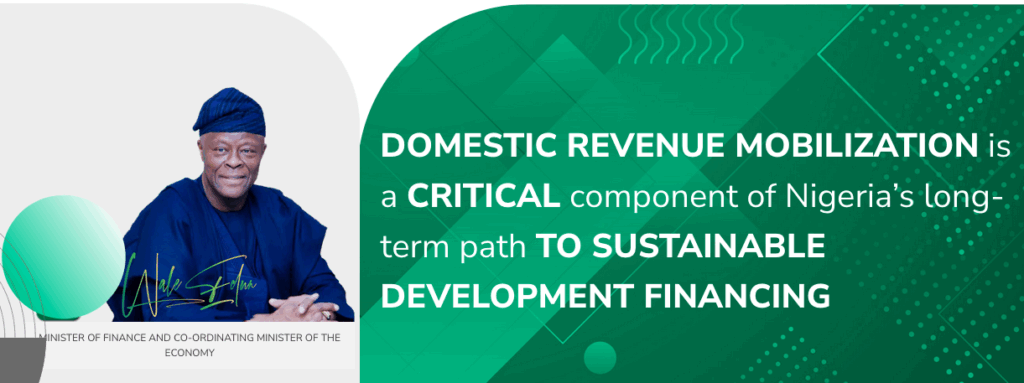
- His name is Chief Adebayo Olawale Edun, often called Wale Edun.
- He was appointed by President Bola Ahmed Tinubu in August 2023.
- He also has the title Coordinating Minister of the Economy, meaning he doesn’t just run the Finance Ministry but helps guide broader economic policy.
What has Chief Adebayo Olawale Edun been doing since he became minister?
Since August 2023, Wale Edun has led many reforms and actions. Here are some of them in simple terms:
- Bold Economic Reforms
- He worked with the President to remove petrol (fuel) subsidies. That means the government stopped or reduced helping to pay for fuel, which was expensive.
- He lifted restrictions on the exchange rate (how the naira compares to other currencies).
- Improving Tax and Revenue Systems
- He is pushing for better tax policies to increase how much the government collects fairly. This helps pay for services like roads, hospitals, education.
- He is working to make sure revenue agencies (like Customs, FIRS, etc.) are more efficient and lose less money through leakages or bad processes.
- Spending Reforms / Transparency
- He has changed how government payments are done so that they are clearer and more visible. For example, payments are made directly to contractors or suppliers. This reduces waste and corruption.
- He is overseeing something called Ministry of Finance Incorporated (MOFI) to better manage government assets, including real estate properties. The idea is to decide whether to sell them or partner with private sector to use them better.
- Supporting Key Sectors & Reducing Crisis Effects
- There is a plan to refinance debt in the electricity sector, so power companies get paid and electricity supply improves.
- He delayed a controversial new tax/surcharge on fuel until January 2026, because people were worried about the cost of living being too high.
- Also, he responded to business community concerns: for example suspending a “Free on Board (FOB) levy” on all imported goods after backlash.
- Goals & Plans
- The minister has said the government aims for a high economic growth rate (about 7% GDP growth) starting in 2026.
- He is pushing for programs to help people in many local communities — giving credit, making production more efficient, helping agriculture grow faster than population growth.
CAPITAL MARKET: Grow Market Capitalization from 14.3% to 25% of GDP
- Issue long-term, high-yield debt instruments (e.g., Special Purpose Bonds) to finance targeted projects and initiatives, particularly in agriculture and industry.
- Promote greater institutional participation by encouraging pension funds and insurance companies to increase their allocations in the capital market.
- Collaborate with fintech firms to design and introduce innovative capital market instruments such as multi-issue structured products and specialized bonds tailored to support SMEs.
- Provide incentives for the issuance and uptake of ESG-compliant securities, thereby deepening the market for sustainable finance.
- Leverage SUKUK bonds as a vehicle for mobilizing capital for government infrastructure projects, and work with the Securities and Exchange Commission (SEC) to ensure such instruments are tradable on the stock exchange.
- Establish a national commodity exchange with regional trading hubs to enhance transparency, liquidity, and price discovery in agricultural and industrial commodities.
- Review and modernize the Non-Banking Financial Company (NBFC) regulatory framework to unlock credit flows to critical private-sector segments such as housing finance, agriculture, and SMEs.
- Partner with fund managers to create diaspora and retail-focused investment products, encouraging wider participation in domestic securities markets.
- Strengthen regulatory enforcement mechanisms to safeguard shareholder rights and ensure investor protection.
Why this matters
- Many Nigerians are facing high inflation, meaning prices of food, fuel, and everyday goods are going up. These reforms affect whether those get worse or start easing.
- When revenue increases and spending becomes more transparent, there is more trust, and the government can do more development work.
- If reforms are done well, Nigeria could attract more investment, reduce debt problems, and have better infrastructure and services.
Challenges
But there are also big challenges:
- People worry that removing subsidies or adding taxes will make living harder, especially for the needy.
- There is always a risk that reforms are promised but take too long or are poorly implemented.
- Because the economy is large and many sectors are weak (power supply, foreign exchange issues, etc.), fixing them takes time and consistent effort.
Below are some recent numbers (2024–2025) from Nigeria, with simple explanation of how they relate to what the Finance Minister has been doing.
Key Numbers & Trends
| Indicator | Value / Trend | What this Means |
|---|---|---|
| GDP Growth | • 3.40% growth in 2024 vs 2.74% in 2023. • In Q1 2025, economy grew 3.13% year-on-year after the GDP was rebased. | The economy is growing, slowly but steadily. Rebasing (updating how GDP is measured) gives a clearer picture. It shows services and industry are contributing well; agriculture is weak. |
| Inflation (Cost of Living) | • In March 2025, inflation rose to 24.23% year-on-year. • In June 2025, inflation eased to 22.22% year-on-year. • Inflation has been falling a bit since very high levels in late 2024. • IMF projects inflation for whole 2025 will average ≈ 26.5%. | Prices are still rising very fast, so cost of living is a big issue. But the gradual decline suggests some success in slowing inflation. It also means people are still under pressure because things are expensive. |
| Inflation in Food / Core Items | • Food inflation is high but showing signs of decline from extreme spikes. • Core inflation (excluding volatile food or energy) remains high. | Because core inflation stays high, it means even non-food costs (transport, housing, services) are adding to the burden. The Finance Minister’s policies need to target both food prices and these other costs. |
How These Numbers Relate to What the Minister Has Done
- Removing fuel subsidies and allowing the exchange rate to adjust have been major moves. These reforms tend to push prices up in the short term, but they reduce distortions and can help stabilize the economy over time. This matches with the high inflation seen, but also some easing.
- With inflation easing slowly, the Finance Minister’s tax and revenue reforms, transparency measures, and better collaboration with other ministries help build confidence. People see that the government is trying to manage the pressure rather than ignore it.
- The improved GDP growth in 2024 and Q1 2025 suggests that despite inflation and other challenges, the economy is still able to expand under the current policies. Service sectors are doing well. The industrial sector is doing okay. Agriculture needs more help.
Overall Picture & What to Watch out for
- Nigeria is going through a tough time: prices went up a lot, but recent policies seem to be having some positive effect in slowing inflation.
- The economy is growing, though not as fast as many would hope. Targets (like 6% growth) are still far away.
- A key test is whether inflation continues to fall and whether people begin to feel relief in food costs, transport, housing.
- Also important: how external factors (global food, oil prices, foreign exchange stability) behave, because they affect inflation and economic growth too.
Conclusion
The Minister of Finance and Coordinating Minister of the Economy of Nigeria is more than just a government title. It is a position that carries great responsibility for the nation’s progress. From managing the budget to coordinating policies across sectors, this office shapes the future of Nigeria’s economy. For citizens, understanding the role of this minister helps them see how government decisions connect to their own lives, from the prices they pay in the market to the jobs they hope to get.
Chief Wale Edun, as both Minister of Finance and Coordinating Minister of the Economy since August 2023, has taken many steps to strengthen Nigeria’s economy: reforming taxes, removing subsidies, pushing transparency, trying to reduce costs of doing business, and helping critical sectors. His work is seen as very important right now, because the country is going through rough economic times, and what he does can affect everyone. Social media posts online are advising him to take caution while making financial decisions in the country so that what happened in Nepal in September 2025 does not happen in Nigeria.