
I have personally experienced Generalized Anxiety Disorder and it will be great to share with everyone how I was able to manage it. Truly speaking, its not as easy as you may think but with some efforts put in place, I was able to overcome it. This is not a medical advice, it is recommended that you consult for professional help is you cannot still manage it by yourself. Now, without wasting time, this guide contains a comprehensive list of practical, evidence-based ways to manage Generalized Anxiety Disorder (GAD) at work.
GAD often involves persistent, excessive worry that can interfere with focus, productivity, and interactions in the workplace. These strategies draw from recommendations by mental health experts and organizations like the Anxiety and Depression Association of America (ADAA), National Institute of Mental Health (NIMH), and various clinical resources.
These tips can help reduce symptoms such as constant worry, restlessness, muscle tension, or difficulty concentrating. Always consider professional help (therapy like CBT, medication, or both) as the foundation, especially if symptoms are severe. These are simply strategies to manage stress and anxiety.
How to Manage Generalized Anxiety Disorder (GAD) at Work
1. Talk to Your Manager or HR (If You’re Comfortable)
Talking about my condition was my first option. This decision opens the door to reasonable accommodations, such as flexible hours, adjusted deadlines, remote work options, or a quieter workspace. As with some other workplaces, mine offers Employee Assistance Programs (EAPs) for confidential support. I was very lucky for the opportunity of opening up to my superior because it helped me to calm down and focus on my job.
You can Start small when opening up while observing the response you get. For me, I started by telling my supervisor about little things. So, you don’t have to share everything, but mentioning you need support for focus or stress management can make a big difference. Give it a try today.
2. Take Time Away as Necessary
Most companies does not have lunch breaks but I was truly luck that the company I work for has 15mins break time. These short breaks prevent overwhelm. Even though you got no official lunch break, step away for 5-10 minutes to breathe, walk, or reset when anxiety builds. Use lunch breaks for fresh air or a quick relaxation exercise.
Scheduled time off, even brief, helps recharge and reduces chronic tension. If your company doesn’t give lunch breaks, simply apply for it and get 5 to 10mins to catch your breath.
3. Work on One Task at a Time
GAD often amplifies multitasking worries. What I did was to simply prioritize and focus on a single task using techniques like the Pomodoro method (25 minutes focused work + short break). With the permission of my supervisor, I broke large projects into small, achievable steps to avoid feeling overwhelmed by deadlines or “what-ifs.”
On the other hand, there are some visual examples of workplace stress and calm coping moments. Let’s take a look at the photo below too:


4. Practice Deep Breathing or Grounding Exercises
When worry spikes, try box breathing (inhale 4 counts, hold 4, exhale 4, hold 4) or 5-4-3-2-1 grounding (name 5 things you see, 4 you can touch, etc.). These quickly activate the body’s relaxation response and can be done discreetly at your desk. I started doing this everyday and it helped me to Manage Generalized Anxiety Disorder (GAD) at Work.
5. Maintain Good Sleep Hygiene
Poor sleep worsens GAD symptoms. I can tell you I wasn’t sleep well due to personal and family issues. What I did was to try to aim for consistent bed/wake times. Next, I limited my caffeine after noon intake (especially avoid high-caffeine drinks), and create a wind-down routine. Better rest improves concentration and emotional regulation during work hours. I rested more during evenings and weekends.
6. Attend Therapy Regularly
Over a few weeks, got to know from my family doctor that Cognitive Behavioral Therapy (CBT) is highly effective for GAD. I did some research and found out that it helps challenge negative thought patterns and build coping skills. I immediately joined a group of church members who were interested to get the CBT therapy too. Many other therapists offer virtual sessions that fit work schedules, you can try them out. I didn’t miss any session because I already knew that consistency with therapy provides long-term tools tailored to workplace triggers.
7. Walk During Your Lunch Hour
Physical movement releases endorphins and reduces muscle tension from anxiety. A 10-20 minute walk outside (weather permitting) clears your mind and breaks the cycle of rumination. For me, I always walk from my office entrance to buy lunch instead of driving. This really helped me to always clear my head before going back to my desk.
8. Limit Caffeine and Practice Healthy Habits
Caffeine can heighten restlessness and heart rate — opt for decaf or herbal options. For me, I completely stopped drinking soda, and other products labelled with caffeine based product. I generally paired this with balanced meals, hydration, and regular exercise outside work to build overall resilience.
9. Use Mindfulness or Relaxation Apps
Using my mobile phone, I searched and download some apps that helped me calm down. Apps like Calm, Headspace, or Insight Timer offer quick guided sessions for work breaks. Mindfulness helps observe worries without getting caught in them. Locate and download the one that suites your purpose.
10. Identify and Manage Triggers
Records or your activities and success was very important for me. Therefore, you can keep a simple journal of when anxiety peaks (e.g., meetings, deadlines). Once you have be able to identify your daily tasks, you can prepare coping plans in advance, like preparing notes early or practicing responses.
11. Build a Support Network
Connect with trusted colleagues (without oversharing if uncomfortable) or join online support groups. Knowing you’re not alone reduces isolation and shame.
12. Set Boundaries and Prioritize Self-Care
Avoid over-committing. Say no when needed, and protect non-work time for recovery. Healthy boundaries prevent burnout, which fuels GAD.
And some helpful overviews of anxiety management strategies:

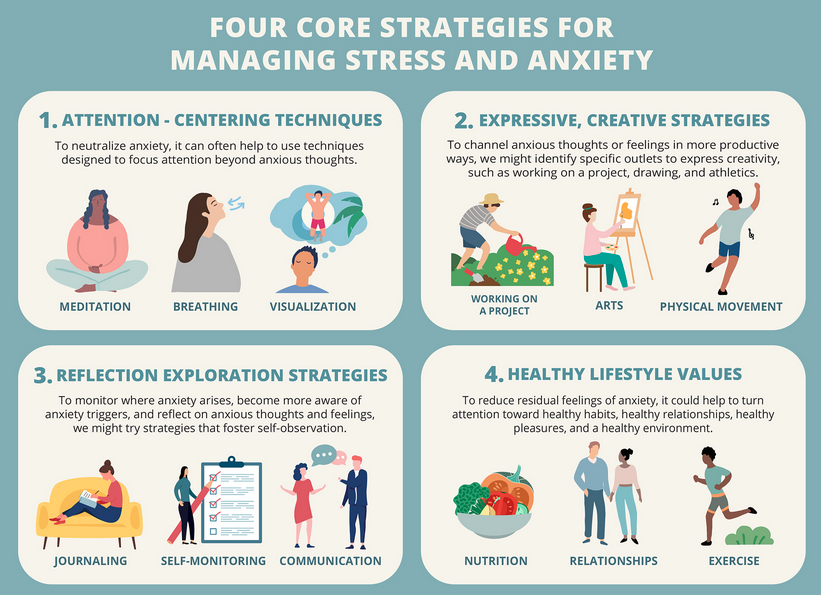
Helpful Insights to Help you manage Stress and Anxiety
The most powerful things that actually moved the needle for me, day after day in the office, were:
- Ruthless task mono-focus
- Little work breaks with deliberate physiological resets (especially box breathing and long slow exhales) done right at the desk.
- Moving my body during lunch
- Drastically cutting caffeine after 11 a.m
- Creating very visible “worry containment” rituals
- Setting extremely clear boundaries
- Radically lowering the bar for what counts as a “good enough” workday when anxiety is loud.
None of these are magic. Some days just showing up, doing the minimum required tasks, and leaving on time is a massive win. They don’t make GAD disappear. But together they lowered the volume of the anxiety from screaming to a persistent background hum – and that difference was enough to keep my job, my relationships, and my dignity intact for years.
Over the years of managing my own Generalized Anxiety Disorder while holding down full-time work, I’ve learned that even without access to professional therapy, CBT sessions, or any form of medication, it is still possible to bring the worst of the constant worry, restlessness, racing heart, and mental fog under noticeable control.
These strategies work best when combined and practiced consistently. If GAD significantly impacts your work or daily life, consult a mental health professional — effective treatment often leads to substantial improvement. You’re taking an important step by seeking ways to manage it. You can also study the Guide to Disaster Management, Emergency and Preparedness in Schools as a bonus.
What you Should bear in Mind – I did it, you can
If I could go back and speak to my younger self – or to any of you right now who are sitting at your desk feeling like the worry is going to swallow you whole – I would say this:
You do not need to be “cured” to function well at work. You do not need a psychiatrist, a psychologist, medication, or perfect CBT skills to start getting your life back. You need a small handful of stubborn, repeatable behaviours that you protect like they are sacred – even on the days when you don’t feel like doing them.
The goal is not to become someone who never feels anxious again. The goal is to become someone who can feel anxious… and still get the report finished, still attend the meeting, still go home at a reasonable hour, and still like themselves at the end of the day.
I’ve lived both versions – the version where anxiety ran the show and the version where I slowly, stubbornly took the steering wheel back using only lifestyle, mindset, and behaviour tweaks. The second version is far from perfect, but it is so much more liveable.
So start small. Pick one or two things from everything we’ve discussed today. Protect them fiercely for the next two weeks. Track – not how you feel (feelings lie), but what you actually managed to do despite the anxiety.
Most days you will surprise yourself with how much ground you can hold when you stop trying to fight the anxiety head-on and start building a quiet, consistent system around it.
You’ve got this. One breath, one task, one boundary at a time. And if you ever doubt it – just remember: I’m still here, still working, still sometimes anxious… and still managing. So can you.