
Starting a new job often sparks a mix of excitement and apprehension and can cause Anxiety of First Day at Work. Many people face intense nervousness as they approach their initial shift, wondering about colleagues, tasks, and expectations. This phenomenon, known as first-day anxiety, affects countless professionals across various industries. Statistics reveal that around 40% of workers report heightened stress levels when beginning a new role, according to surveys from career development platforms. Moreover, this unease stems from the human brain’s natural response to uncertainty, triggering fight-or-flight mechanisms that prepare the body for potential challenges. However, recognizing this anxiety as a common experience helps normalize it. Meanwhile, you can use this New Year Resolutions for Students in High School and College and prepare yourself for the academic year.
For instance, seasoned executives and entry-level employees alike share stories of shaky hands or racing hearts on day one. Therefore, addressing this topic matters because it equips people with tools to navigate transitions smoothly, achieving better mental health and productivity from the outset. In addition, understanding the roots and remedies transforms a daunting start into an empowering opportunity. As a result, this article will explain the intricacies of first-day anxiety, offering insights drawn from psychological research, expert recommendations, and real-world accounts to guide readers through preparation and coping.
People frequently encounter this anxiety because new environments disrupt familiar routines. Psychologists explain that the brain craves predictability, and a fresh workplace introduces unknowns like office dynamics or performance standards. Consequently, individuals may question their abilities, leading to self-doubt. For example, someone transitioning from a remote position to an in-office role might worry about social interactions after years of limited face-to-face contact. Additionally, external factors amplify this tension; economic pressures or high unemployment rates make securing a job feel like a high-stakes achievement, intensifying fears of failure. Research from the American Psychological Association indicates that job-related stress contributes to broader mental health issues, with first-day jitters serving as an entry point. Nevertheless, this anxiety often diminishes as familiarity grows, typically within the first few weeks. Thus, viewing it as a temporary phase encourages proactive steps rather than avoidance.

The prevalence of first-day anxiety underscores its universality
Studies show that millennials and Gen Z workers experience it more acutely due to frequent job changes in gig economies. In contrast, older generations might link it to mid-career shifts. Regardless of age, the emotional toll can manifest in various ways, prompting the need for tailored strategies. Furthermore, cultural contexts influence how people express this nervousness; in collectivist societies, concerns about fitting into teams prevail, while individualistic cultures emphasize personal competence. Overall, acknowledging these dimensions sets the stage for deeper exploration into causes, symptoms, and solutions.
Understanding the Causes of Anxiety at Work
Before you can understand How to Deal With Anxiety at Work you have to calm down and understand your body system. Why? Its because several factors contribute to the anxiety that surfaces on the first day of a new job. Primarily, uncertainty plays a central role. Employees enter unfamiliar territories without clear maps, pondering questions like “Will I like my team?” or “Can I handle the workload?” This lack of information activates the amygdala, the brain’s fear center, releasing stress hormones such as cortisol. As a result, the body enters a heightened state of alertness, which, while adaptive in short bursts, becomes draining over time. Moreover, past experiences shape this response; a previous negative job start can create anticipatory dread, where memories of awkward introductions or early mistakes resurface.
Another key cause involves imposter syndrome, a psychological pattern where individuals doubt their accomplishments and fear exposure as frauds. High-achievers particularly struggle with this, convinced that their hiring resulted from luck rather than skill. For instance, a software developer promoted to a leadership role might dismiss years of expertise, fixating on potential gaps in management knowledge. Research from Harvard Business Review highlights that 70% of professionals encounter imposter feelings at some point, with new jobs exacerbating them. Therefore, this internal dialogue fuels anxiety, making simple tasks feel monumental.
Social elements also intensify the unease.
Humans thrive on connections, yet meeting new colleagues evokes judgments about likability or competence. Introverts, in particular, find small talk exhausting, worrying about saying the wrong thing during icebreakers. Additionally, organizational culture adds layers; a competitive atmosphere might heighten fears of standing out negatively, while a supportive one could ease them. However, without prior exposure, assumptions often lean toward the worst-case scenario.
External pressures compound these internal ones
Economic instability, such as during recessions, makes job security paramount, turning the first day into a perceived audition. Family expectations or financial obligations amplify the stakes, leading to overthinking. For example, parents returning to work after childcare breaks might grapple with guilt alongside nervousness. Furthermore, the pandemic’s legacy has altered dynamics, with hybrid models introducing tech-related anxieties like virtual meeting glitches.
Biological aspects cannot be overlooked
Sleep disruptions from pre-day worries impair cognitive function, creating a vicious cycle. Nutritional habits or caffeine intake influence mood, where skipping breakfast heightens jitteriness. Consequently, physical readiness ties directly to emotional resilience. In summary, these causes intertwine, forming a complex web that demands multifaceted approaches to untangle.
Transitioning from causes, identifying symptoms allows individuals to intervene early. Physical signs often appear first, alerting the body to perceived threats.
Recognizing Symptoms of Anxiety at Work
Individuals experience a range of symptoms when facing first-day anxiety, spanning physical, emotional, and behavioral domains. Physically, the body reacts with increased heart rates, sweaty palms, or stomach butterflies. These responses mimic those of general anxiety disorders, as adrenaline surges prepare for action. For example, someone might notice shallow breathing or muscle tension in the shoulders, signals that the nervous system operates in overdrive. Moreover, headaches or nausea can emerge, especially if sleep suffered the night before.
Emotionally, feelings of overwhelm dominate.
Worrying yourself with thoughts can stay endlessly in your head, therefore, try and focus on potential mishaps like forgetting names or fumbling presentations. This mental chatter erodes confidence, fostering irritability or sadness. In severe cases, it borders on panic, with sensations of impending doom. However, not all emotions manifest dramatically; subtle unease, like a persistent knot in the chest, also counts.
Behaviorally, anxiety influences actions
Procrastination on preparations, such as delaying outfit choices, stems from avoidance. On the day, overcompensation occurs through excessive talking or withdrawal. For instance, an anxious person might arrive excessively early or check emails obsessively. Additionally, appetite changes or reliance on comfort habits, like nail-biting, signal distress.
Recognizing these symptoms empowers self-awareness
Writing down patterns helps track triggers, while discussing with trusted friends normalizes them. If symptoms persist beyond initial weeks, professional consultation becomes advisable, as they might indicate broader issues. Nevertheless, most fade as routines establish. Thus, monitoring provides a foundation for effective management.
With symptoms in mind, preparation comes as a proactive shield. Planning ahead minimizes surprises, building a sense of control.
Preparation Before the First Day to avoid Anxiety at Work
Effective preparation transforms anxiety into manageable anticipation
Start with logistical details:
research the commute route, accounting for traffic or public transport delays. Test the journey a day prior to gauge timing, ensuring punctuality without rush-induced stress. Additionally, select attire that aligns with company dress codes, opting for comfortable yet professional options to boost self-assurance.
Mental readiness proves equally vital
Visualize the day positively, imagining successful interactions and task completions. This technique, endorsed by sports psychologists, reprograms the mind toward optimism. For example, spend ten minutes daily picturing greetings with colleagues or navigating the office layout. Moreover, review job descriptions and company values to refresh knowledge, reducing fears of inadequacy.
Sleep hygiene forms a cornerstone
Adjust bedtime gradually over a week to align with early starts, avoiding grogginess. Create a calming evening routine, such as reading or herbal tea, to promote restful nights. Nutrition complements this; balanced meals stabilize energy, while hydration prevents fatigue. Avoid heavy caffeine post-noon to sidestep interference with sleep.
Social preparation eases interpersonal worries
Connect with the hiring manager via email for any last-minute clarifications, like parking or entry procedures. If possible, link with future teammates on professional networks for light introductions. However, keep interactions brief to maintain mystery until in-person meetings.
Self-care rituals anchor emotional stability
Practice mindfulness exercises, like guided meditations focused on transitions, to cultivate calm. Additionally, affirmations reinforce capabilities: repeat phrases such as “I bring value” or “I adapt quickly.” Writing down some gratitude(s) shifts focus from fears to strengths.
Finally, assemble a support kit
Pack essentials like notebooks, pens, and snacks, plus comfort items like a favorite pen or photo. This tangible preparation symbolizes readiness, diminishing intangible doubts. As a result, these steps create a buffer, allowing energy for engagement rather than survival.
On the actual day, real-time strategies take over. Breathing techniques and mindset shifts guide through moments of intensity. Furthermore, knowing How to Manage Time for Work and Study will help you this year.
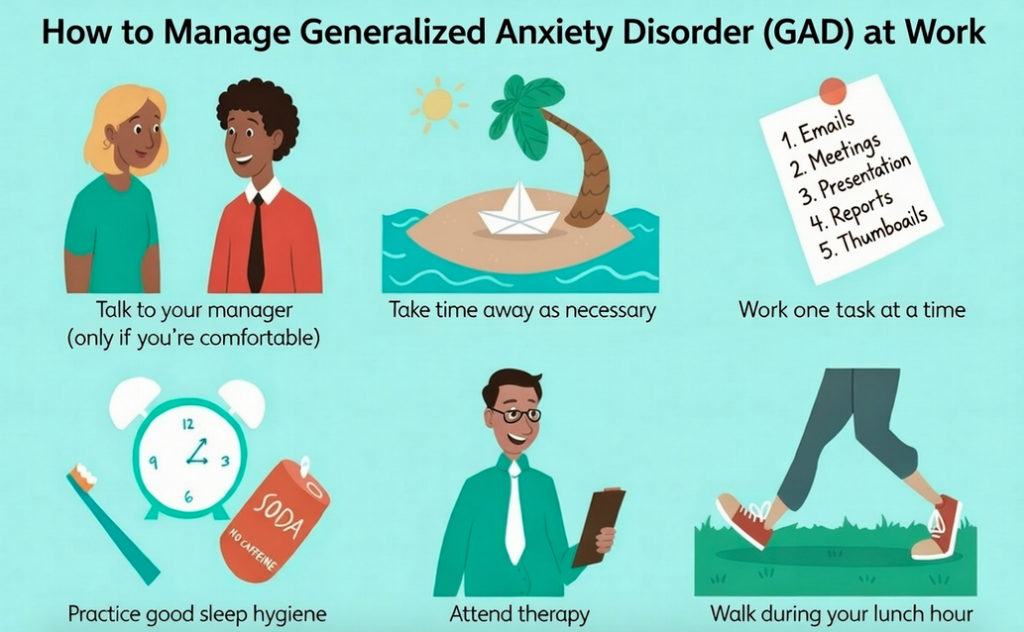
How to Manage Generalized Anxiety Disorder (GAD) at Work
- Talk to Your Manager or HR (If You’re Comfortable)
- Take Time Away as Necessary
- Work on One Task at a Time
- Practice Deep Breathing or Grounding Exercises
- Maintain Good Sleep Hygiene
- Attend Therapy Regularly
- Walk During Your Lunch Hour
- Limit Caffeine and Practice Healthy Habits
- Use Mindfulness or Relaxation Apps
- Identify and Manage Triggers
- Build a Support Network
- Set Boundaries and Prioritize Self-Care
These strategies work best when combined and practiced consistently. If GAD significantly impacts your work or daily life, consult a mental health professional — effective treatment often leads to substantial improvement. You’re taking an important step by seeking ways to manage it
Strategies for the Day Itself to Manage Anxiety at Work
The first day arrives, and anxiety peaks, but targeted tactics provide relief. Begin with deep breathing: inhale for four counts, hold for four, exhale for four. Repeat during commutes or before entering the building to lower heart rates. This method, rooted in yoga principles, activates the parasympathetic nervous system, countering stress.
Upon arrival, observe surroundings mindfully
Note layouts, people, and vibes without immediate judgments. This passive approach reduces pressure to perform instantly. For example, smile and introduce yourself simply, focusing on listening over speaking. Asking open questions like “What excites you about this team?” fosters connections organically.
Embrace beginner status
Remind yourself that questions demonstrate eagerness, not ignorance. Seek clarifications early to build foundations. Moreover, take notes diligently; jotting key points aids retention and shows attentiveness.
Breaks offer resets
Step away briefly for walks or water, preventing buildup of tension. If possible, find quiet spots for quick affirmations or stretches. Additionally, frame challenges positively: view a confusing process as a learning chance.
Social integration happens gradually
Join conversations without forcing; shared lunches or coffee breaks naturally reveal commonalities. However, respect boundaries—avoid oversharing personal details initially.
Physical comfort sustains focus
Stay hydrated, eat lightly, and move periodically to combat sedentary strain. If anxiety surges, ground yourself: name five visible items, four touchable ones, and so on, a sensory exercise to anchor in the present.
End the day reflectively
Note achievements, no matter how small, like remembering names or completing orientations. This builds momentum for subsequent days. Consequently, these strategies turn the first day from ordeal to milestone.
Beyond the initial experience, sustained efforts ensure anxiety doesn’t linger. Building habits supports ongoing well-being.
Long-Term Management of Anxiety at Work
Managing first-day anxiety extends into weeks and months, evolving into broader career resilience. Establish routines that promote stability, such as consistent start times or weekly check-ins with supervisors. These structures reduce unpredictability, allowing confidence to grow.
Seek feedback regularly
Constructive input clarifies performance, dispelling doubts. For instance, schedule monthly reviews to discuss progress and areas for improvement. This proactive stance transforms perceived weaknesses into growth opportunities.
Cultivate relationships
Invest in team bonds through collaborative projects or informal chats. Strong networks provide support during stressful periods, mitigating isolation. Moreover, mentorship accelerates adaptation; identify experienced colleagues for guidance.
Prioritize work-life balance
Set boundaries to prevent burnout, like designating off-hours for relaxation. Engage in hobbies or exercise to recharge, maintaining perspective that work constitutes one life aspect.
Monitor mental health
Track anxiety patterns via apps or journals, intervening with therapy if needed. Cognitive behavioral techniques reframe negative thoughts, proving effective long-term.
Professional development bolsters self-efficacy
Attend workshops or online courses to enhance skills, reinforcing competence. As expertise accumulates, imposter feelings wane.
Adapt to changes
Job roles evolve, so flexibility guards against recurring anxiety. Celebrate milestones, like surviving the first month, to reinforce progress. In essence, long-term management involves consistent actions that foster security and growth, turning initial jitters into distant memories.
Now, let’s take look at some real stories and expert views enrich understanding, showing anxiety’s shared nature.


Real-Life Stories and Expert Insights about Anxiety at Work
Countless people share their first-day experiences, revealing common threads. One professional recounted arriving early, heart pounding, only to find welcoming colleagues who eased tensions through casual talks. Another described overcoming imposter syndrome by asking questions, discovering everyone started similarly. These anecdotes, drawn from online forums and social platforms, highlight that nervousness often precedes triumph.
Experts offer valuable perspectives
Career coaches from platforms like Forbes recommend visualization for mental preparation, picturing positive outcomes to build neural pathways for success. Psychologists from Healthline advocate shifting sleep schedules beforehand, ensuring alertness. Additionally, mindfulness apps like Calm suggest box breathing to manage in-the-moment spikes.
A therapist emphasized observing without judgment, allowing adaptation at one’s pace. Management consultants from Harvard stress connecting with key team members early, setting up informal meetings to gather insights.
Collectively, these insights affirm that anxiety signals growth potential. Professionals who rode the “idiot’s curve”—feeling incompetent initially before gaining mastery—emerge stronger. For example, a LinkedIn post detailed navigating this phase by documenting learnings, turning confusion into clarity.
Thus, blending personal tales with professional advice illustrates pathways through anxiety for both workers and students.
Conclusion
First-day anxiety at work represents a universal difficulty, yet one surmountable with awareness and action. From grasping causes like uncertainty and imposter syndrome to spotting symptoms such as rapid heartbeats, knowledge empowers. Preparation through logistics and mindset work lays groundwork, while day-of strategies like breathing maintain composure. Long-term habits ensure sustained ease, supported by stories and expert wisdom.
Ultimately, embrace this anxiety as a sign of investment in your path. Each nervous step forward builds resilience, leading to fulfilling careers. Remember, every expert once trembled on day one. Therefore, approach your start with curiosity, knowing growth awaits.