Assistive technology in Europe, America and Asia has been growing rapidly leaving Africa behind because it is expensive, difficult to run, and in inaccessible to solve everyday problems. The cost of devices like screen readers and prosthetics for people with disabilities is very high to buy. Even the few spare parts for fix broken machines are usually imported from China or the US. There is hardly training for local technicians to learn how to repair damaged devices which a long term problem.
Most people in some African countries find it difficult to make use of some software because it is developed in either English or Chinese and not translated into local languages. This alone makes some AI tools to be unusable for the people who need them most to either save life or make life easier. Therefore, a lot of Africans with disabilities from different countries, may be left out because of machine or software design.
We are grateful to God Almighty because things are starting to change in Africa positively. Different technology startups in 5 African countries are developing some AI technology they call assistive technology, which will go a long way to help people. to help people with daily challenges. They are using artificial intelligence (AI) to make these tools smarter, easier to use, and better for local needs.
For example, AI is helping with:
- Text-to-speech and translation in local languages
- Custom-made prosthetics and mobility aids
- Real-time feedback for users
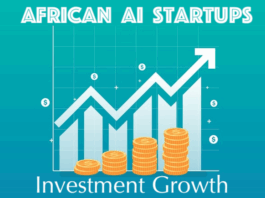
This market was worth $523 million in 2023 and could grow to $1.076 billion by 2030. The devices made in Africa are usually cheaper and sometimes even work better than the imported ones.
But this change is not only about products. It also shows that Africa is creating its own solutions, building its economy, and taking control of its future in technology.
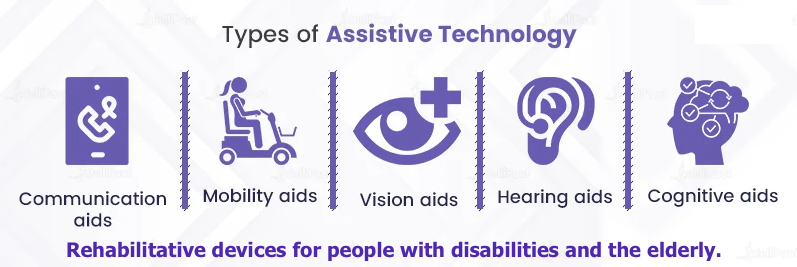
Here are five African startups leading this big change trying to develop some devices, software, or equipment that increases, maintains, or improves the functional capabilities of people with disabilities.

Cure Bionics (Tunisia)
In 2018, Mohamed Dhaouafi started a company called Cure Bionics to make prosthetic arms that are smarter and cheaper for people in Africa. One of their big creations is the Hannibal Hand, a 3D-printed bionic arm that works with sensors to pick up muscle signals. What makes it special is that the more you use it, the more it learns from your movements.
Training with the arm is also fun because they built a VR app called Myo Link. Instead of boring practice, people train with games, which makes it easier to adapt. The arm even gives a sense of touch and runs on solar power, which is a huge advantage in places where electricity is not reliable.
Normally, prosthetic arms can cost up to $50,000, but Cure Bionics is producing theirs for about $8,000 by making them locally and using AI for personalisation. This makes the technology more accessible for people who need it.
Because of this work, the company has been noticed worldwide. They’ve been featured on Forbes 30 Under 30 and MIT Innovators Under 35, among others. They’ve also received over $75,000 in funding from groups like the Tony Elumelu Foundation, the European Investment Bank, and Qualcomm’s Make in Africa program.
Vinsighte (Nigeria)
In Nigeria, a startup called Vinsighte is opening up education for people who are visually impaired. Their app, called Visis, uses AI to scan text and then read it out loud. Unlike many screen readers built outside Africa, Visis understands local accents and multiple languages, which makes it much more useful here.
The founders, Oluwatomisin Kolawole and Oyolola Caleb, started the company in 2020. At first, they placed 35 units in eight schools and were able to reach over 5,000 students. Today, their technology has already helped more than 15,000 people in Nigeria. What makes it even better is that it comes with affordable subscriptions, so schools that can’t afford expensive foreign devices can still use it.
Vinsighte has gotten attention and support from groups like the Mastercard Foundation EdTech Fellowship, Orange Corners, MIT Solve [ED], and CcHub, among others. They’ve also won funding from the Art of Technology grant and have earned more than $165,000 in revenue. In 2023, they were even highlighted at the Paris Peace Forum as an African project proving that inclusive education is possible.
Signvrse (Kenya)
In Kenya, Signvrse is working to make life easier for the deaf community. Their main product, Terp 360, turns spoken or written words into sign language using AI avatars. Basically, the computer “listens” or “reads,” and then instantly translates it into sign language for the user.
The company was started in 2020 by Elly Savatia. Since then, they’ve won a Presidential Innovation Award, joined the Google.org Accelerator on Generative AI, and even became a global finalist at Microsoft’s Imagine Cup, where they won $25,000. Right now, Terp 360 is being tested in schools and government offices across East Africa, with over 8,000 hours of use already logged.
Hope Tech Plus (Kenya)
Another Kenyan company, Hope Tech Plus, is focusing on mobility for the visually impaired. Their key product is The Sixth Sense, a small device you can wear. It uses sonar (like bats) and gentle vibrations to warn users about obstacles around them. This way, people can walk more confidently without bumping into things.
The founder, Brian Mwenda, started the company in 2017 after being inspired by friends who were visually impaired. He wanted to build tools that would make their daily lives easier.
Hope Tech Plus has already been supported by the Innovate Now Accelerator and even won the Royal Academy of Engineering’s Africa Prize for Engineering Innovation. So far, they’ve mostly been running with bootstrap funding and help from friends and family. But in 2024, they began planning their first big funding round to expand their work.
HearX Group (South Africa)
In South Africa, HearX Group is transforming hearing care. Normally, hearing aids cost over $5,000 a pair and require many hospital visits, which puts them far out of reach for most Africans. HearX decided to change that.
They built AI-powered hearing aids that people can buy for around $999 a pair—that’s just about one-fifth of the usual price. Users can also test their own hearing with a smartphone app and adjust the hearing aids in real-time, with remote support from an audiologist.
The company, founded by Nic Klopper and his team, has done very well. By 2023, they had already recorded $58 million in sales, raised nearly $60 million in funding, and won a Startup Award at SAVCA. They also got early backing from the Assistive Technology Impact Fund.