Among the Yoruba speaking ethnic group found in the southwestern Nigeria including Lagos state, Ekiti State, Oyo state, Osun and Ondo states, it is majorly Ekiti State that their trains youth in AI and Coding. Apart from Lagos that is the main business and tech hub of the country, Ekiti one of the states in the west that also values education and technology at large. Ekiti is famously known as the “Fountain of Knowledge.” because they have the highest number of professors in Nigeria. That nickname is not just a slogan, it reflects the deep respect the people here have for education.
As of 2024, despite being Nigeria’s fifth-smallest state, Ekiti has the third-highest literacy rate in Nigeria at 95.7%, and an out-of-school rate of only 9% making it the third most literate state in the country after Imo and Lagos states.
“In almost every family in Ekiti, you’ll find someone with a Master’s degree or even a PhD,” said Esther Ajayi, a government official in Ado Ekiti. Only last year, Ekiti State University, a major institution in the state, promoted 70 new professors in August and 22 in September, making them 92 profs in one year alone.
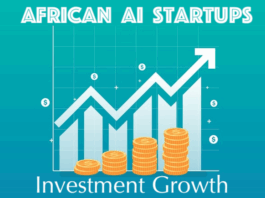
But today, the state is looking beyond traditional classrooms. What is the new ambition? Its simply to prepare young people to lead in artificial intelligence (AI) and other cutting-edge technologies. They are hoping to draw-in more investments into Nigeria and overtake Egypt and other African AI Startups that have raised over $1Million for AI technology.
Ekiti is a State Built on Learning in the South West
Despite being Nigeria’s fifth-smallest state, Ekiti ranks impressively high in literacy—95.7% as of 2024, with just 9% of children out of school. That makes it the third most literate state in the country, only behind Imo and Lagos. For the government, this intellectual strength is more than a statistic—it’s the launchpad for creating a digital economy powered by AI.
About 1yr ago, Ekiti State started a big change in how it handles technology. The Ministry of Innovation Science and Digital Economy decided not just to adjust the old ICT (information and communication technology) policy, but to rewrite it completely so it can fit today’s world and also prepare the Yoruba people for the future.
The Commissioner of ISDE, Seun Fakuade, explained that the team worked very hard, discussing with people from different ministries and thinking carefully about what Ekiti really needs to grow. Instead of just copying the past, they made a plan that can be reviewed every year and that includes new things like Artificial Intelligence (AI).
In the new plan, AI is not just for conference discussions only but physical implementation of technology. It covers important things like how to handle data, how to use technology responsibly, how to build the right infrastructure, how to teach our people, and even how AI can help government, businesses, and citizens.
In the ISDE conference, Fakuade said that he believes AI should work in three main ways (i) helping government talk to government, (ii) helping government work with businesses, and (iii) helping government serve the people better. He compared AI to when the engine was invented—it changed the whole world. He said it is necessary for Ekiti to be part of this new wave, so that we don’t get left behind in the fourth industrial revolution.
Giving AI a Local Voice in Yoruba Language
One of the boldest projects in Ekiti today is the creation of an AI-powered language model designed to understand and speak the Ekiti dialect. This is the current project Commissioner Fakuade is most passionate about.
“Go online and ask any big AI to speak Ekiti—you’ll see the struggle,” said Commissioner Fakuade, who is leading the effort. Therefore, he encouraged young ones to join different coding classes to increase the efforts of training AI to properly translate English to Yoruba like an Ekiti person speaking Ekiti language.
The project is more than a tech experiment. It’s about protecting culture. As the Yoruba continues teaching AI to capture the tonal richness of Ekiti expressions, the state hopes to preserve oral traditions that might otherwise fade away.
Globally, UNESCO warns that about 40% of the world’s 6,700 languages are at risk of disappearing. Ekiti’s “language bank” could make sure the Ekiti dialect is not among them. Imagine future filmmakers animating characters that speak authentic Ekiti, or businesses building AI-powered bots that sound genuinely local. It will be wonderful, Commissioner Fakuade stated.
Additionally, the commissioner has a clear message for Big Tech: “If Google—or anyone—wants our data, they must pay. We are investing in our language for generations yet unborn.”
The Infrastructure Challenge
Good ideas need more than passion—they need infrastructure. In Ekiti, that means fibre-optic cables, broadband internet, and reliable electricity.
As of 2023, the state had only about 1,178 km of fibre-optic cables—still one of the lowest in Nigeria. But change is happening.
Back in 2021, Ekiti became the first state to slash its right-of-way charges from ₦4,500 to the nationally agreed ₦145 per metre, opening the door for telecoms like MTN Nigeria and IHS Towers to lay cables across the state.
Today, fibre connections reach government offices, universities like ABUAD and EKSU, and even secondary schools. The Ministry of Innovation and Digital Economy has already gone completely paperless.
Still, as Fakuade puts it: “Connectivity remains the backbone. Without it, the world can’t see what we’re building.”
Keeping Talent at Home
Ekiti’s brainpower is both its strength and its challenge. Many young people trained in tech leave for Lagos, Abuja, or even abroad. Lekan Ojulowo, who runs KinPlus Technologies, has trained over 1,000 students in AI and software development. But most, he admits, leave for better opportunities.
“Our focus now is building AI products that make trainees want to stay here,” he said. “We can’t all move to Lagos.”
PurpleBee Technologies, the state’s largest tech hub, faces a similar issue. While there’s raw talent, experienced developers often need to be brought in from other cities for big projects.
To change this, the government is investing in the Ekiti Knowledge Zone, a massive hub set to launch by 2026. With its “Life Sciences Knowledge Corridor,” the zone will connect universities, hospitals, and businesses—making it possible to fly into Ekiti, work, and leave without ever entering the city.
Starting Young with AI and Coding for Children and Youths
Ekiti isn’t waiting for university students to embrace AI—it’s starting with children. Robotics, coding, and AI pilot programs now begin as early as age seven.
In July, 400 students between ages 7 and 14 graduated from a robotics course. The long-term plan is to bring these programs into every school, in partnership with the United Nations Development Programme (UNDP).
“The future is a child trained in Ekiti being globally competitive with anyone, anywhere,” Fakuade said.
But there’s a hurdle: many teachers are still trained in outdated programming languages, and not all have access to the right tools. Systematic teacher retraining is a top priority.
Local Hubs, Local Innovation
Beyond government policy, Ekiti’s tech future is being shaped by homegrown innovators.
- McKodev Tech Lab, founded by Banji Akole, is building Afrocentric technologies like OctopusVAI—an AI tool that helps small business owners create full websites in minutes. Over 200 developers have trained at the lab, gaining hands-on experience in projects designed for African needs.
- KinPlus Technologies, led by Ojulowo, is integrating generative AI into its curriculum, training young people to use AI for creativity, design, and content production.
- PurpleBee Technologies, founded by Dapo Oriola, created PBRESULT, an AI-powered school management system. Already in 20 secondary schools, it digitises grading, tracks attendance, and gives parents real-time access to their children’s performance.
These hubs prove that world-class solutions can come from Ekiti itself, not just imported from abroad.
Where You Can Learn AI and Digital Skills in Ekiti (2025)
1. Ekiti State MSME ICT Skill Acquisition Hub
This training center was opened by the Ekiti State Government in partnership with Wakocode Technologies, this fully-funded training program is open to youths aged 18–35 in Ekiti.
- Subjects taught: Full-stack development, cloud computing, cybersecurity, backend development, data analytics, and more—including foundational AI skills and data science.
- Format: Remote, boot-camp style learning, with training certificates awarded upon completion.
2. STEM Education Curriculum (Innovate Ekiti Initiative)
The state’s STEM curriculum has been updated to include robotics, AI, data science, drone technology, and more. These courses has been added in the school system to improve interest in AI among younger learners.
3. Ekiti State University (EKSU)
Based in Ado-Ekiti campus, EKSU offers Computer Science programs that cover topics of emerging tech, including AI and Coding, data science, and information security.
Students also participate in tech competitions and collaborate with organizations like Google, Microsoft, and NITDA.
4. Federal University of Technology & Environmental Sciences, Iyin-Ekiti
This newer federal university has launched a Computing and Information Technology faculty that includes specialized programs in AI and Coding, cybersecurity, data science, software engineering, and GIS.
5. Tech Workshops at Universities
Educational programs organized by Professors Without Borders are coming to EKSU. In mid-2025, they’re hosting workshops on AI tools, digital innovation, and entrepreneurship with loans, equipping students and faculty with global tech skills.
6. Google Developer Group (GDG) at EKSU: “Build with AI 2025”
EKSU’s student-led GDG chapter is hosting a workshop where developers learn how to create AI-powered apps using tools like Google AI Studio, Gemini models, and Vertex AI.
Comparing these AI and Coding Training Programs in Ekiti State
| Program / Institution | Focus Area | Who It’s For |
|---|---|---|
| MSME ICT Skill Hub (Wakocode) | Full-stack, Cloud, Cybersecurity, Data | Youths 18–35, Ekiti residents |
| Innovate Ekiti STEM Curriculum | Robotics, AI, Data Science | School-aged students |
| Ekiti State University (EKSU) | AI, Data Science, IT | Undergrads and general students |
| Federal University Iyin-Ekiti | AI, Computing, GIS, Cybersecurity | Undergrad students |
| GDG “Build with AI” Workshops | Google AI tools and app development | EKSU students and devs |
| Professors Without Borders Workshops | AI tools, innovation, entrepreneurship | University students and staff |
If you’re looking to learn AI or digital technology in Ekiti State this year:
- Young adults (18–35) can sign up for free remote training through the MSME ICT Skill Acquisition Hub.
- School and university students can tap into STEM classes, workshops, and Ai labs at EKSU.
- Innovators and developers should look out for GDG “Build with AI” events at EKSU.
- University-level programs in computing and AI are available at FUOYE.
The Road Ahead for AI and Coding in Ekiti State
Ekiti State is not blind to its challenges—gaps in infrastructure, teacher reskilling, and talent retention remain. But with a literacy rate among the highest in Nigeria, a government willing to bet on AI, and a generation of local innovators, the “Fountain of Knowledge” is positioning itself as the Fountain of Innovation.
Towards the end of the AI and Coding conference, Fakuade has this as his concluding remarks on: “Systemic reform, strong partnerships, and an entrepreneurial spirit—that’s how we leap.”